Adjust the magnification to suit your observation
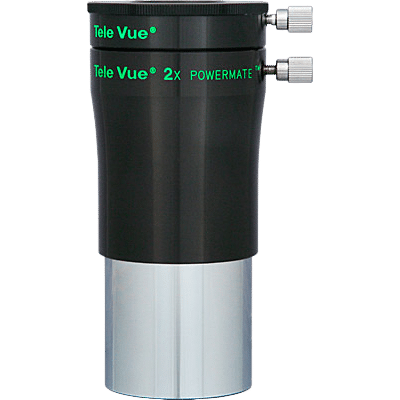
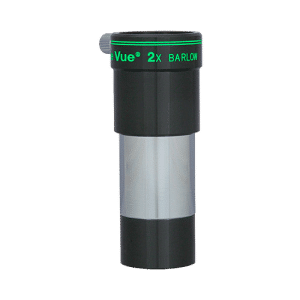
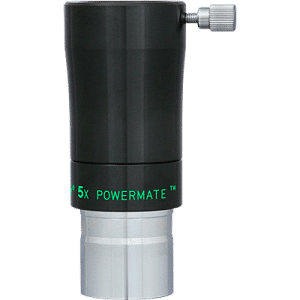
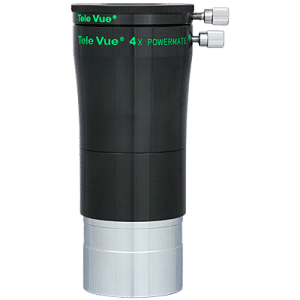
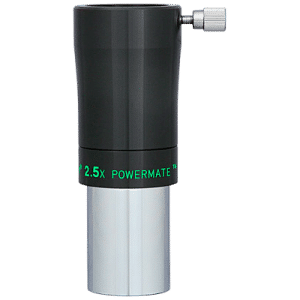
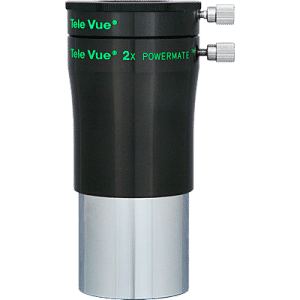
The Tele Vue Powermate 2x increases your telescope’s effective focal length to double the nominal magnification while using the same eyepiece. It allows you to expand your range of eyepieces without changing instruments, particularly for observing the Moon and the planets. Its telescope-side thread is in the 2 inches (50.8 mm). The version number is PMT-2200 : The factor and diameter must be considered together when making a selection.
A Powermate, which is different from a traditional Barlow lens
Tele Vue combines a negative doublet with a positive pupil-correcting doublet. This four-element design magnifies the image while maintaining the intended exit pupil position for the eyepiece. This prevents the Powermate from being treated as a simple negative Barlow lens. It is particularly useful with long-focal-length eyepieces where you want to maintain a comfortable eye relief.
Video Editing and Photography
The 2-inch model comes with a 1.25-inch adapter. It is compatible with both of these eyepiece sizes. For a camera, check the connection cable and cable length. Specific photographic adapters are separate accessories: a camera adapter is not included by default with this kit. The magnification factor used in photography must be verified in the Tele Vue documentation corresponding to your mount.
Technical specifications
| Brand |
Tele Vue |
| Reference |
PMT-2200 |
| Rated amplification |
2x |
| Flow on the telescope side |
2 inches (50.8 mm) |
| Number of lenses |
4 |
| Adapter included |
2 to 1.25 inches |
Choice Questions
How do you calculate the magnification? Divide the telescope's focal length by that of the eyepiece, then apply the nominal magnification factor of this amplifier as intended for its configuration. Very high magnification can reduce apparent brightness and accentuate turbulence: choose a reasonable combination for your instrument.
Is it compatible with any camera? The insertion diameter alone is not enough to guarantee compatibility with a camera. You must also check the mount, the focal length, the field of view, and whether the camera can be focused. A camera or telescope is not included.
Official Tele Vue Documentation