Astrophotography

Browse our selection of items for taking pictures of the sky

Brand
Filters by marque with category
See more
Subcategories
Filters By Categories in category
See more
Price
Filters by price - slider
0 CHF - 48857 CHF
Availability
Filters by availability
Frequently asked questionsClick to view themTap to view them
Besides the telescope tube, the mount, and the camera, what else do I need to take astrophotos?

In addition to these three components, you’ll need to power and connect everything else: power supply, cables, heating elements, focus motor, guide system, control computer, filters, and adapter rings. These small components often account for a significant portion of the budget. We’ll help you make a list of everything you need before you buy to avoid any surprises.

After a smart telescope: what's next for astrophotography?

Start by taking full advantage of everything it can do: equatorial mode, cumulative exposure times over several nights, and processing raw (FITS) files in Siril or PixInsight. We explain how to retrieve them in our article.

If the virus is present, the next step is a classic three-part setup, and the mount comes first: it’s what will determine the quality of your images for years to come. A cohesive system: the mount ZWO AM3N (4.1 kg, 8 kg load without counterweight), the scope Askar 71F (71 mm, 490 mm, flat field), the cooled camera ZWO ASI2600MC Pro (23.5 × 15.7 mm APS-C, 26 MP), all powered by the'ASIAIR Plus.

You get a field of view similar to that of a Seestar S50 Pro (2.75° × 1.84°), but with 1.6″ per pixel, 26 MP instead of 8.3, exposures lasting several minutes, a cooled sensor, and interchangeable filters. Your DSLR and telephoto lenses can be mounted on the mount right from day one, and the smart telescope becomes a second instrument for impromptu observing sessions.

Note from Deep Space Astronomy: Don't try to buy everything at once. A good mount and a short telescope will last you for years; you can upgrade the camera and filters later.

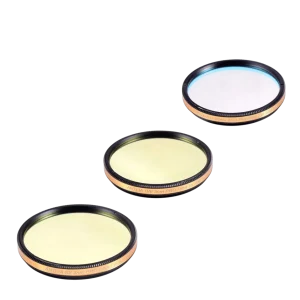
What filter should I use to photograph nebulae from the city?

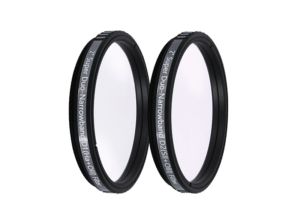
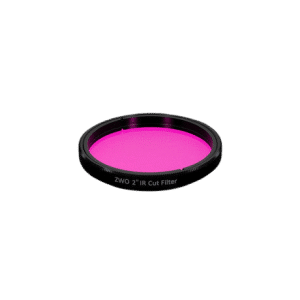
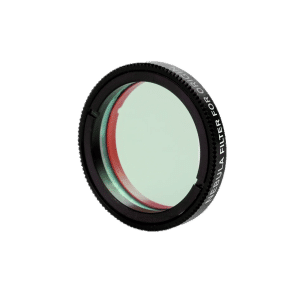
With a color camera, a multiband filter isolates the spectral lines of nebulae and filters out light pollution: the'Antlia Triband RGB Ultra II or the Quad-Band. With a monochrome camera, the SHO Antlia 3 nm Pro Kit provides the best contrast, even under a bright sky. Why Antlia: see our Comparison of Halos.

A filter works for emission nebulae (M42, the Rosette, NGC 7000), but not for galaxies or star clusters, which emit across the entire spectrum: for these, nothing beats a dark sky. Our Best Viewing Spots in Switzerland give you some ideas.

How do I check my backfocus?

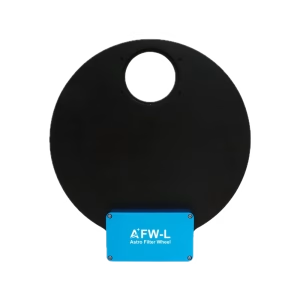
Send us the part numbers for each component (corrector, filter wheel, rings, camera) and a photo of the assembled system: we’ll verify the calculations. Keep in mind that a filter placed in the beam path increases the optical path length by about one-third of its thickness. Binoculars with a built-in flat-field corrector, such as the'Askar 71F do not require precise backfocus; see also Barlow and backfocus.

Is an EAF focusing motor compatible with my eyepiece holder?

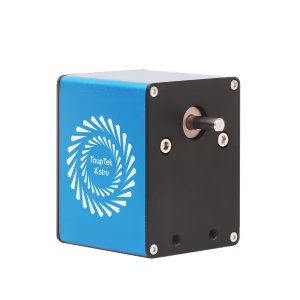
Measure the diameter of the focus knob shaft and that of the eyepiece holder body, and send us a photo of the focus knob with the gear attached: we'll check the fit. The Celestron C8 and C9.25 have their dedicated EAF adapter. Please note: the new EAF is not compatible with the first generation of ASIAIR or the second generation of ASIAIR Pro.

Which flat-field panel should I use for my telescope?

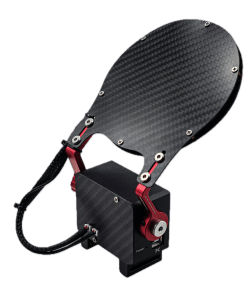
Choose a light diameter that is at least equal to the outer diameter of your anti-fog or light shield: measure it before ordering. The WandererCover V4-EC 225 mm It is controlled via ASIAIR, NINA (ASCOM), or INDI, and its built-in heater keeps the panel dry all night long.

[category_menu_mobile]