




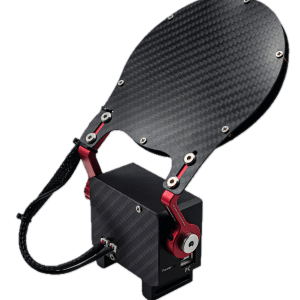
WandererCover V4-EC 125mm Motorized Flat Panel
Recommended diameter: 125 mm. Check the measurement and the mounting.
CHF 299.00


The SQA85 stands out for its exceptional astrophotographic performance. This is made possible by its air-spaced Petzval quintuplet design, including two SD glass elements (details on SD glass below). The central stellar spot has an RMS radius of less than 1.6 µm, and that in the corners is no more than 2.5 µm, offering extremely fine resolution. The optics also ensure homogeneous full illumination and high-quality MTF data.

The self-planing design of the SQA85 enables it to cover a full-frame image circle of 44 mm, without the need for additional flatteners or additional back-focus calculations. With a connection distance of between 40 mm and 70 mm (ideally 55 mm), you can use the scope straight away, without having to worry about far-fetched backfocus calculations. Technically, all you need to do is focus! This is not the case with standard scopes which, even when you manage to focus in the center of the image, can show distortions at the edge of the field (this being due to the corrector). Here, there's no need to add a corrector!
The SQA85's fog shield is designed to be retractable, deploying easily in use. It protects the lens from external and internal light intrusion, while guarding against damage and fogging.

Large screws allow the clamp to be opened and closed without additional tools. Six M4 and M6 threaded holes on each side of the clamp facilitate installation of the base or a dovetail plate and connection of various accessories. The collar's lightweight structure, with an optional top handle, includes a slot for astronomical accessories. Finder bases are fitted on both sides of the focuse, eliminating the need to dismantle them when repositioning the finder and providing additional slots for other accessories.
The plate supplied with the scope is in standard format. It's easy to install and dismantle when needed.

The Modulation Transfer Function (MTF) measures the sharpness of a lens by analyzing the clarity of even fine details in the image. It's a bit like a "sharpness score" that tells us how well thin details (like fine lines or distant stars) appear distinct. The SQA85 maintains very high image quality: on the MTF graph, it keeps an MTF above 0.9, even at low frequencies (10 LP/mm), even at the edge of the frame. This means that stars, even at the edges of the image, remain clear and sharp, with no loss of contrast.
Relative Illumination (RI) assesses whether light is evenly distributed from the center to the corners of the image. When IR is high, the corners of the image are as well lit as the center, thus preventing vignetting (shadows on the periphery). The SQA85 offers a relative illumination of around 85 % at the edge of the frame, ensuring that the image remains bright and balanced, even at the edges, and that no detail is lost in the corners.
This diagram shows how accurately the lens reproduces points of light, such as stars. The aim is to obtain sharp points of minimal size, without light scattering around them. For the SQA85, the central point has an RMS radius of less than 1.6 µm, while the one at the edge reaches less than 2.5 µm. This means that stars appear as very fine dots, both in the center and in the corners of the image, offering remarkable sharpness for astrophotography.
The ZYGO is an international reference instrument for testing the optical quality of lenses. It's a bit like a "quality scanner", analyzing surface detail and lens precision. The ZYGO test results for the SQA85 show excellent star-dot quality, confirming that the lens reproduces stars sharply and accurately, even at the most demanding levels of optical control.

Here are a few accessories we've selected for this model, depending on your needs.
Recommended diameter: 125 mm. Check the measurement and the mounting.
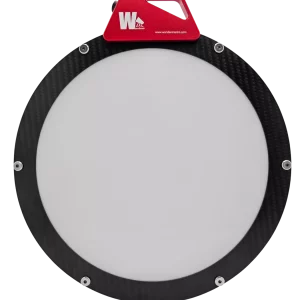
Recommended diameter: 150 mm. Check the measurement and the mounting.
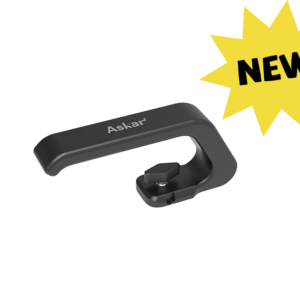
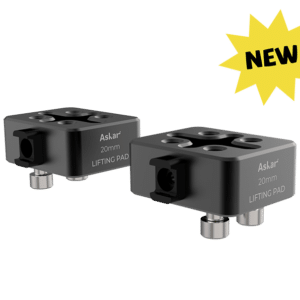
Optional 20-mm Askar spacer for the SQA85; mounts under the tube; screws included.
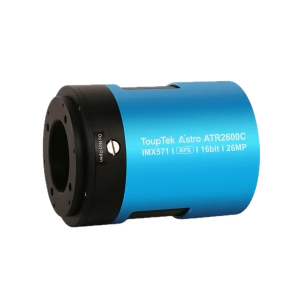
ToupTek IMX571-cooled camera, AR window; check the adapters and the connection distance of the optical train.
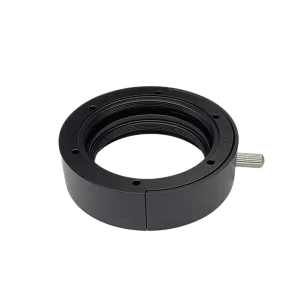
Choose the complete M54 drawer, not just the filter holder; filters are sold separately. Check the adapters, the draft, and the seal.
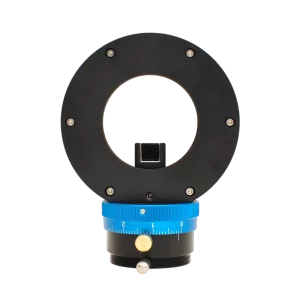
Select the connector based on the mounting configuration; check the adapters, connection distance, prism, and focus of the guide camera.