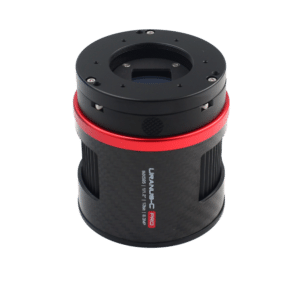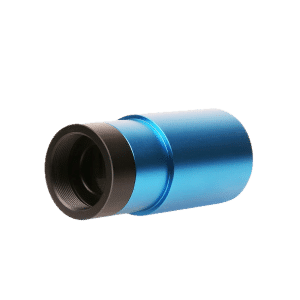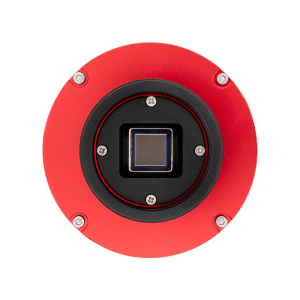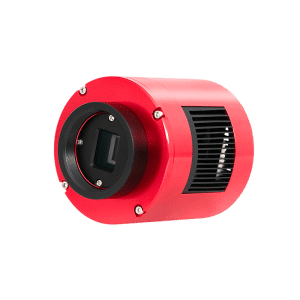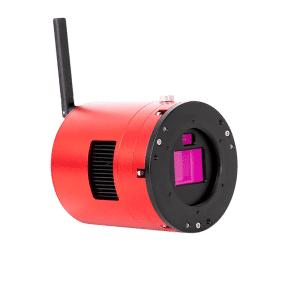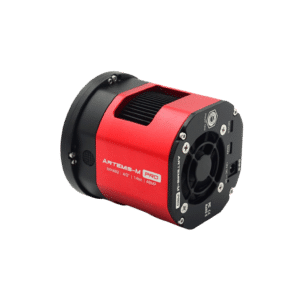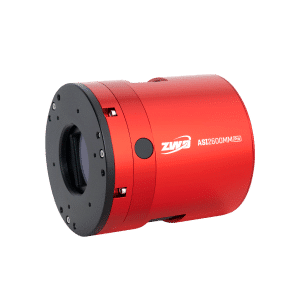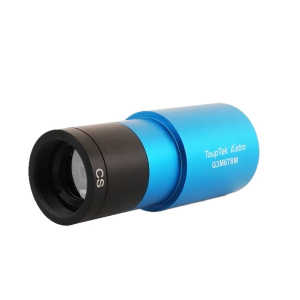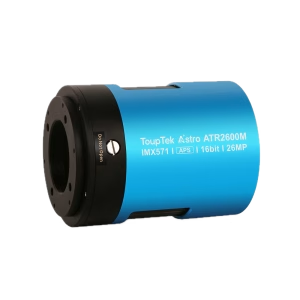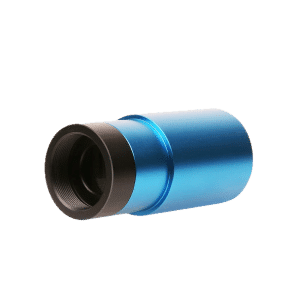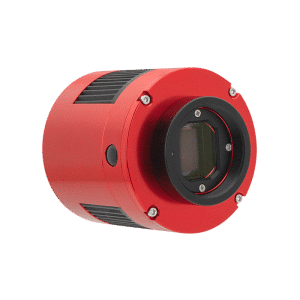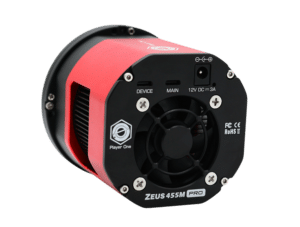
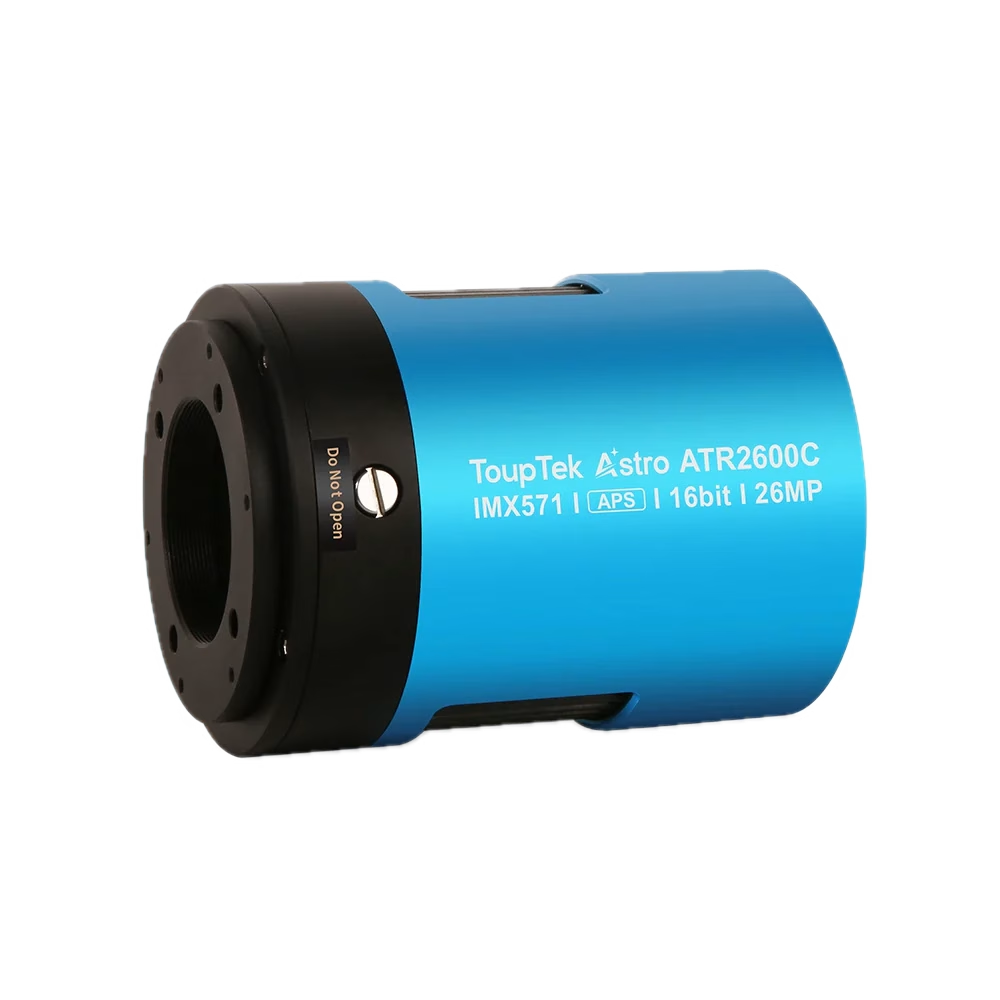







ToupTek ATR2600C AR: Sony IMX571 APS-C Cooled Color Astro Camera
Visit ToupTek ATR2600C (part number ATR3CMOS26000KPA V4.4) is a cooled color CMOS camera designed for
l’deep sky astrophotography. Its back-illuminated Sony IMX571 sensor in APS-C format combines
26 million pixels, a native 16-bit analog-to-digital converter, and ultra-low readout noise.
It thus offers a wide, detailed field of view, a broad dynamic range, and a simple color workflow for photography
nebulae, galaxies, star clusters, and large dust complexes.
This version receives a Rear protective window without a built-in IR-cut filter. So she leaves
Astrophotographers can choose the appropriate external filter for each target—from broadband to dual-band—while benefiting from
a two-stage TEC cooling system, an amp-glow-free design, and a 512 MB DDR3 buffer.
Key Features of the ToupTek ATR2600C
- Sony IMX571 BSI APS-C Color Sensor 23.4 × 15.7 mm to cover a wide field of view.
- Resolution of 6224 × 4168 pixels, or about 26 Mpx, with square pixels measuring 3.76 µm.
- Native 16-bit ADC with a claimed dynamic range of 14 stops to preserve weak signals such as highlights.
- Advertised minimum reading noise of 0.883 e−, depending on the selected mode and gain.
- Full-well capacity of 51 ke− in standard mode and up to about 100 ke− in High Full Well mode.
- Double-stage TEC cooling up to 42 °C above room temperature to stabilize long exposures.
- Architecture without amp-glow and a four-level adjustable window defogger.
- USB 3.0 and 512 MB DDR3 buffer memory to ensure reliable image transfer during acquisitions.
A Sony IMX571 sensor designed for deep-sky imaging
Wide APS-C sensor and 3.76 µm pixels
With a diagonal of 28.3 mm, the APS-C sensor covers significantly more of the sky than a small planetary sensor, while
while maintaining high resolution. It is suitable for eyepieces, astrographs, and corrected telescopes capable of illuminating a circle
APS-C image. The 26 MP resolution reveals the structures of extensive nebulae, the arms of galaxies, and the
dense star fields, while leaving plenty of room for cropping.
Color in a Single Scan
The color Bayer matrix enables OSC acquisition (One Shot Color) : the information
Red, green, and blue images are captured during the same exposure. Therefore, a filter wheel is not essential for
Start with color. A drawer or filter holder is still useful for installing a UV/IR-cut filter to block light pollution.
or dual-band, depending on the project.
16-bit, low-noise, and high-capacity
The 16-bit converter reproduces subtle tonal transitions and makes it easier to process high-contrast areas,
for example, around bright stars or at the center of a galaxy. The HCG, LCG, Low Noise, and High Full Well modes
allow you to balance readout noise, dynamic range, and saturation capacity depending on the exposure time and the target.
Controlled cooling for more consistent long exposures
The two-stage thermoelectric module can cool the sensor to as low as 42 °C below ambient temperature during
long exposures. PID control helps maintain a stable setpoint temperature, which makes the libraries of
makes them easier to reuse and limits fluctuations in thermal noise throughout the night. The actual difference achieved
depends on the outdoor temperature, ventilation, the setpoint, and the available power.
The optical window heater, which can be adjusted to four levels, reduces the risk of condensation. The DDR3 buffer of
512 MB temporarily buffers data to smooth out USB traffic and minimize frame loss.
The absence of amp-glow, on the other hand, is due to the camera's electronic design.
AR Glass Version: Choose Your Filtering Options Freely
AR stands for anti-glare. The window protects the sensor and minimizes reflections, but it does not include a
UV/IR cut. ToupTek specifies a transmission range of 380 to 1100 nm for AR glass; the useful response of the
The system's performance then depends on the sensitivity of the sensor, the optics, and the external filter used. This configuration is
particularly flexible if you use multiple types of filters and want to maintain complete control over the
bandwidth.
Mechanical Integration and Software Compatibility
The M42 × 0.75 female thread and the nominal back focus of 17.5 mm make it easy to integrate into many
imaging trains. The included M42 external ring allows for a 12.5 mm configuration. To reach 55 mm
Since these are often requested by correctors and reducers, the rings, filters, and accessories must be added up precisely
actually installed.
The camera is controlled using the ToupSky software and ToupTek drivers. It is documented for use with
N.I.N.A. via ASCOM, as well as with compatible environments supported by the manufacturer's drivers and SDKs.
The images produced can then be calibrated and processed using specialized software such as Siril or PixInsight.
Technical Specifications of the ATR2600C AR
| Features | Value |
|---|---|
| Model / Part Number | ToupTek ATR2600C / ATR3CMOS26000KPA |
| Camera Type | Cooled color CMOS camera for deep-sky astrophotography and EAA |
| Sensor | Sony IMX571 back-illuminated (BSI) color sensor, rolling shutter |
| Format / Diagonal | APS-C, 23.4 × 15.7 mm, diagonal 28.3 mm |
| Resolution | 6,224 × 4,168 pixels, approximately 26 MP |
| Pixel size | 3.76 × 3.76 µm |
| A/D converter | Native 16-bit |
| Dynamic range | Up to 14 stops, depending on the mode and settings |
| Playback noise | Announced minimum: 0.883 e−, depending on the mode and gain |
| Pleine-puits | 51 ke− As standard, up to about 100 ke− in High Full Well mode |
| Peak quantum efficiency | Greater than 80 % |
| Laying time | 0.1 ms to 3600 s |
| Reading Modes | HCG / LCG, Low Noise, High Full Well, ROI, and binning |
| Full-sensor cadence | Up to 6.8 fps in 16-bit and approximately 13 fps in 8-bit via USB 3.0, excluding Low Noise mode |
| Buffer memory | 512 MB DDR3 |
| Cooling | Two-stage TEC with fan and PID control, ΔT up to 42 °C below ambient temperature |
| Anti-fog protection | Four-level adjustable window heater |
| Protective window | Anti-reflective AR glass, without a built-in IR-cut filter |
| Specified AR Coating Range | 380 to 1,100 nm; the effective sensitivity depends on the sensor, the optics, and the external filtering |
| Data Interface | USB 3.0 / USB 2.0 Type-B, with a USB 2.0 hub for accessories |
| Camera mount | M42 × 0.75 female thread |
| Backfocus | 17.5 mm by default; 12.5 mm configuration with the included M42 external ring |
| Camera Power Supply | 12 V DC / 3 A, 5.5 × 2.1 mm connector |
| Power adapter for this version | 100–240 V AC input, power cord with European plug |
| Dimensions / Weight | Ø 80 mm × 107.1 mm / approximately 577 g |
| Drivers and Software | ToupSky, native ToupTek, ASCOM, and N.I.N.A. drivers; other environments depending on the driver, SDK, and operating system |
Sample Contents of the Box
- ToupTek ATR2600C Cooled Color Camera, blue housing, with AR glass window
- 100–240 V AC to 12 V DC power adapter and cord with a European plug
- USB 3.0 Type-A to Type-B cable, approximately 1.5 m long
- 12.5 mm External M42 Ring
- M48-to-M42 adapter and 16.5-mm and 21-mm extension tubes
- Protective cap
The exact contents may vary depending on the batch, region, or package ordered.
For what applications should you choose this cooled astro camera?
The ATR2600C is designed for astrophotographers who want the field of view of an APS-C sensor and the simplicity of a color camera
and the consistency of controlled cooling. It represents a logical evolution from a reflex or hybrid system to
automate long nights of data acquisition, create mosaics, or engage in computer-assisted observation.
- Diffuse nebulae and large H II complexes viewed through a suitable filter
- Galaxies and clusters, thanks to 16-bit dynamic range and low readout noise
- Star fields, IFN, and dark dust under clear skies
- EAA and live stacking via USB 3.0 transfer and ROI
Frequently Asked Questions About the ToupTek ATR2600C AR
What is the difference between AR glass and the IR-cut version?
AR glass is an anti-reflective protective window without a built-in IR-cut filter. It offers greater flexibility
to choose an external filter. The IR-cut version directly blocks ultraviolet and infrared light at the lens. I do not recommend this one.
Should I add a UV/IR-cut filter to this AR version?
For broadband color with refractive optics, it is generally recommended to add one in order to better
Master exposure and color balance. With a dual-band or narrow-band filter, you should instead control
the out-of-band blocking specifications of the filter used.
Is the ToupTek ATR2600C compatible with N.I.N.A.?
Yes. ToupTek provides documentation on using the ATR2600C with N.I.N.A. via its ASCOM driver. Install the latest versions of the
manufacturer's driver and the ASCOM platform before connecting the camera.
What type of food should be used?
Cooling requires a regulated continuous power supply of 12 V / 3 A. This configuration comes with
a power adapter and a cord with a European plug. A stable power source within the range specified by the manufacturer
can also be used.
What is the camera's backfocus?
The back focus is 17.5 mm. A 12.5 mm configuration is possible using the included external M42 adapter ring.
Next, calculate the optical thickness of each ring, filter, slide, wheel, or optical splitter to ensure that the distance is maintained.
as required by your regulator or reducer.
Is a filter wheel required?
No. The color sensor records all three RGB components in a single acquisition. For the AR version, a simple
A drawer or filter holder may be sufficient if you want to switch between UV/IR-cut, anti-pollution, and dual-band filters.