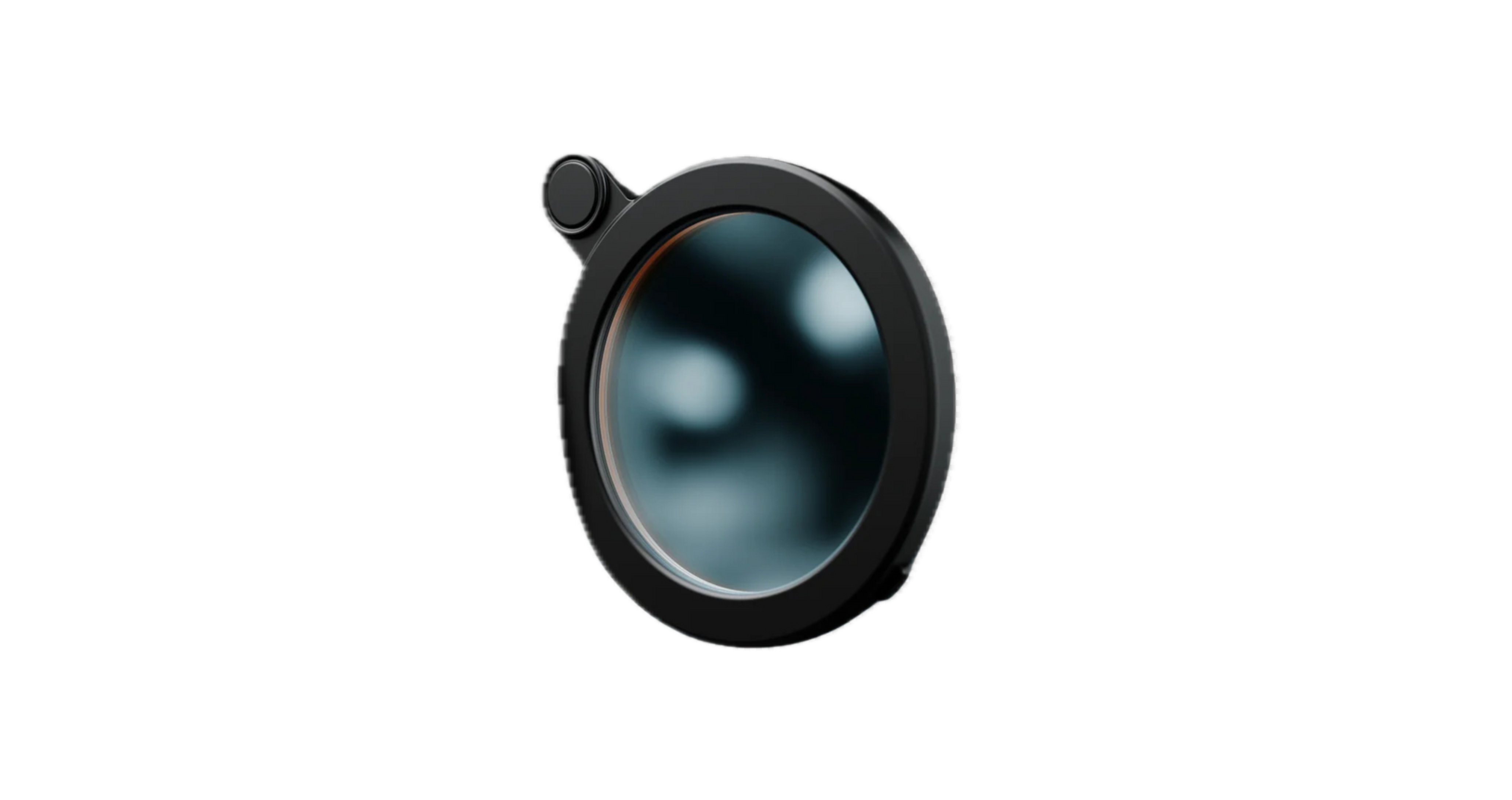
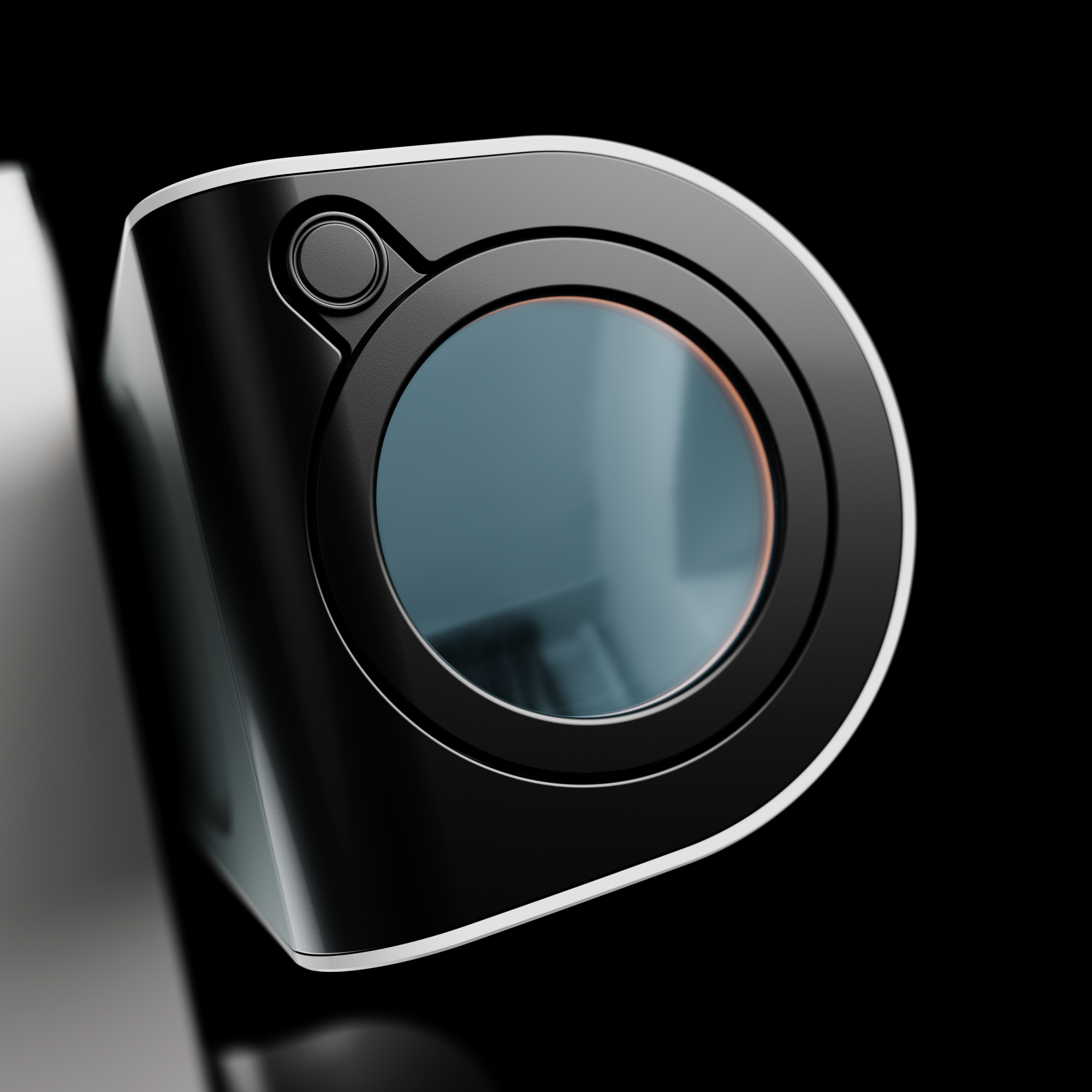
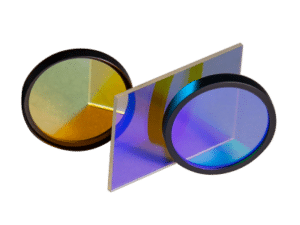
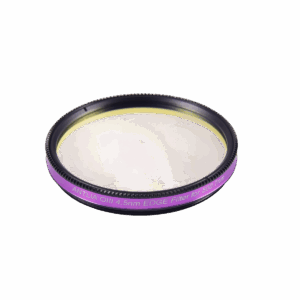
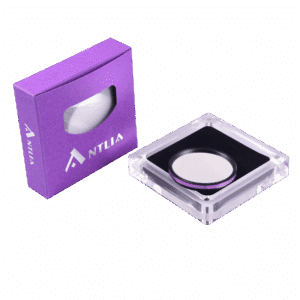
The Dual Band Vespera filter is a dual narrow-band interference filter that significantly improves photo quality, whether you're observing from an urban or natural environment.
By precisely selecting the wavelengths of Hydrogen Alpha (H-alpha) and Oxygen III (O-III), found mainly in nebulae, the filter enhances the contrast between the stellar object and the background sky. This results in a superior image quality, with finer details and stars.
Let only the essential pass
The Dual Band filter has been designed to allow only two particular wavelengths to reach the Vespera sensor:
- O-III
- H-alpha
The filtered wavelengths make it particularly effective for photographing nebulae in emission (e.g. Orion nebula M42, Heart nebula IC 1805 ...), obscure nebulae surrounded by hydrogen (e.g. Horsehead nebula, Elephant Trunk nebula), planetary nebulae (e.g. Owl nebula M97, Moon nebula IC 1805 ...): Horsehead Nebula, Elephant Trunk Nebula), planetary nebulae (e.g. Owl Nebula M97, Dumbbell Nebula M27...), supernova remnants (e.g. Swan Lace, Crab Nebula M1).
For globular clusters (e.g. Hercules cluster M13, cluster M92...), the selectivity of the Dual Band filter makes it possible to obtain finer stars.
A custom-designed filter
The optical quality of the Dual Band filter has been specifically studied by our engineers to offer full aperture use, without any impact on the instrument's optical diameter. The lens ring is equipped with an electronic micro-map that enables Vespera to detect the Dual Band filter and adapt its observation and image processing parameters.
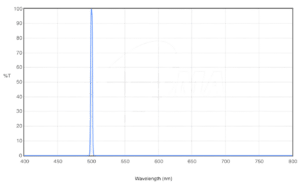
Transmission curve
The filter has 12nm of bandwidth in each of the two wavelengths (O-III = 500.7nm, H-alpha = 656.3nm).
Products in the same category
Antlia LRGBR+ Dark Series filter
CHF 499–CHF 689Price range: CHF 499 through CHF 689
To provide the best experiences, we use technologies such as cookies to store and/or access device information. Consenting to these technologies will allow us to process data such as browsing behavior or unique IDs on this site. Failure to consent or withdrawal of consent may adversely affect certain features and functions.
Functional
Always active
Storage or technical access is strictly necessary for the legitimate purpose of enabling the use of a specific service explicitly requested by the subscriber or user, or for the sole purpose of transmitting a communication over an electronic communications network.
Preferences
Storage or technical access is necessary for the legitimate purpose of storing preferences not requested by the subscriber or user.
Statistics
Storage or technical access used exclusively for statistical purposes.Storage or technical access which is used exclusively for anonymous statistical purposes. In the absence of a subpoena, voluntary compliance by your Internet service provider or additional third-party records, information stored or retrieved for this sole purpose generally cannot be used to identify you.
Marketing
Storage or technical access is necessary to create user profiles in order to send advertisements, or to track the user on a website or on several websites with similar marketing purposes.