



More products from the brand :Takahashi

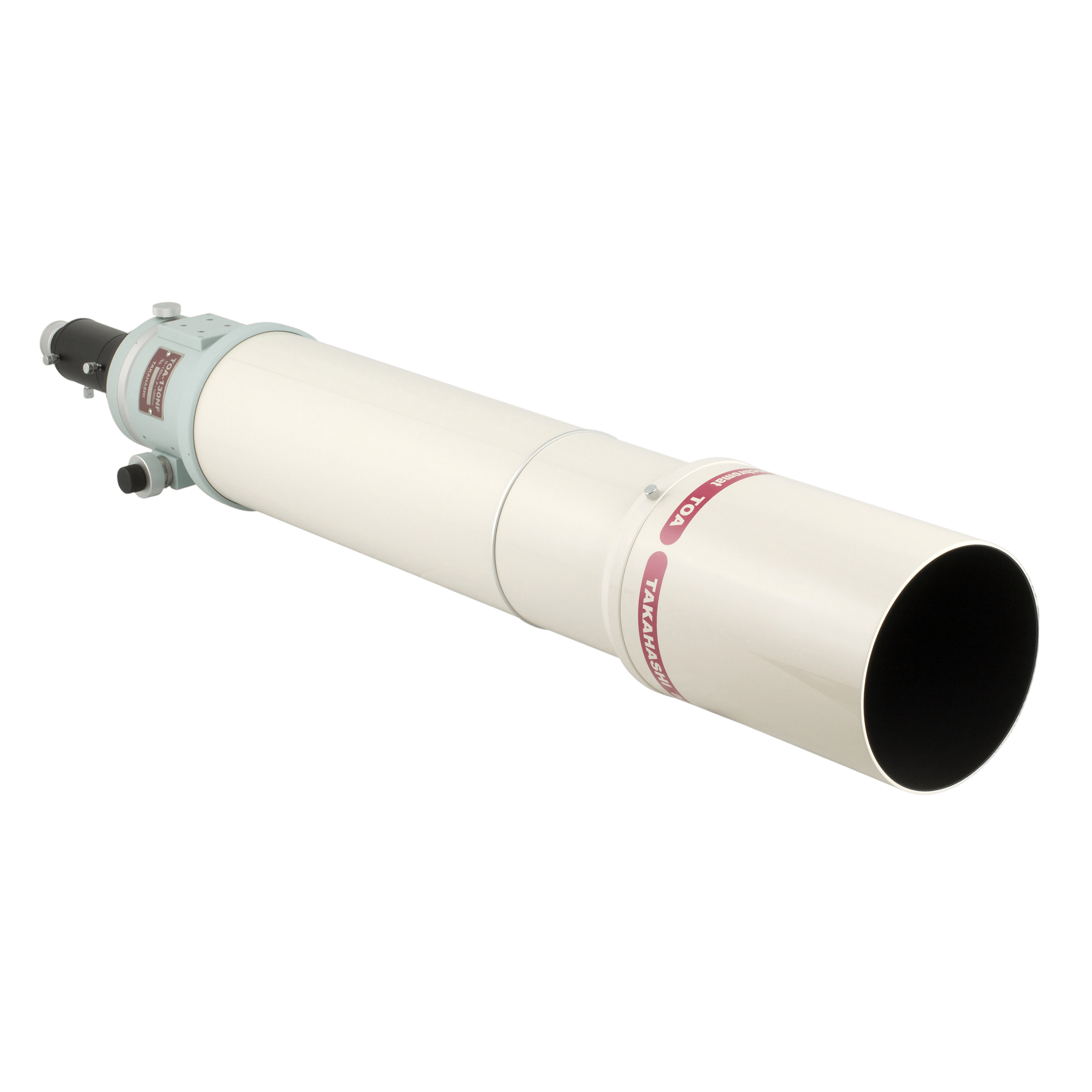
Takahashi TOA-130NFB – 130 mm ED triplet telescope (tube only)

Takahashi TOA-130NFB telescope with a 130 mm ED triplet, native focal length of 1,000 mm at F/D 7.7, and a 4.0-inch rack. Part number TOK13210, tube only.

CHF 6'515.80incl. Swiss VAT

Reference TOK13210

Will be ordered for you
Timeframe: Please contact us

Free shipping in Switzerland on orders of 200 CHF or more
Credit Card · TWINT · PayPal · Invoice · Klarna
Free pickup in Nyon · credit card or cash
8 Recommended Products for This Model
Product description

Product description

A 130-mm ED triplet for visual observation and photography

The Takahashi TOA-130NFB combines a 130 mm objective with a native focal length of 1,000 mm, for an F/D ratio of 7.7. Its wide-air-gap triplet includes two S-FPL53 ED glass lenses. This optical design corrects chromatic aberrations to preserve sharpness and contrast in both astronomical observation and photography.

Development and Assembly

The 4-inch rack features the focusing mechanism specific to the NFB version. The native back focus is 274.5 mm. The retractable dew shield reduces the footprint for storage.

Setting Up the Tube for Photography

The TOA-35FL corrector and the TOA-35RD reducer are available as options. To assemble the photographic train, follow the diagram for the TOA-130NFB version and the selected accessory: it specifies the rings and the distances to the sensor.

Contents Included

TOA-130NFB optical tube (single unit). The finder, its mount, and the mounting clamp must be purchased separately.

Choose a frame and mount that are compatible with the assembled unit, then check the balance and tightness.

Takahashi TOA-130NFB Documentation

Accessories for Your System

Back to the sections
Frequently asked questions

Frequently asked questions

What can you photograph with the Takahashi TOA-130NFB?

The Takahashi TOA-130NFB is an apochromatic triplet refractor with two ED lenses, featuring a 130 mm aperture and a 1000 mm focal length (f/7.7), designed primarily for deep-sky astrophotography. Its focal length is ideal for observing galaxies (M51, M101, the Leo Triplet), planetary nebulae such as M27, and globular clusters, with a good level of detail. At f/7.7, which is rather slow for deep-sky imaging, it benefits from being used with a focal reducer.

Which camera should I pair it with?

With an APS-C camera featuring 3.76 µm pixels (Sony IMX571 sensor), you get approximately 0.78″ per pixel for a field of view of 1.3° × 0.9°. This is a fine resolution: under moderate turbulence, 2×2 pixel binning or a 0.7× reducer will produce rounder stars. With the 0.7× reducer, the resolution increases to 1.11″ per pixel and a field of view of 1.9° × 1.3°.

Do you need a leveling device or a reducer?

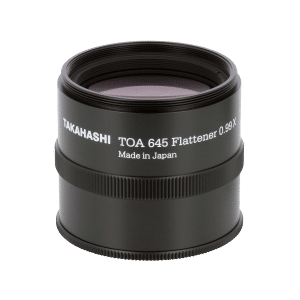
Yes, whenever you're using an APS-C or full-frame sensor: like any uncorrected triplet lens, it has a slight field curvature that stretches the stars in the corners. Dedicated correctors: Takahashi TKA31587S: TOA-645 correction kit for TOA-130 ; Takahashi TOA-35 - 0.7× focal reducer for TSA/TOA (focal length equivalent to 700 mm, f/5.4); Takahashi 35FL: 50.8 mm field corrector for TSA/TOA.

What backfocus should be used?

274.5 mm (metal back); 117.5 mm with TOA-35FL; 56.2 mm with TOA-645FL; 65.5 mm with TOA-35RD 0.7×. This focal length is measured from the thread to the sensor, including rings, filter wheel, and filter drawer: adhering to this measurement down to the millimeter ensures that stars remain round in the corners.

What kind of frame should I choose?

The tube weighs about 11.7 kg; with the camera, filter wheel, and guide scope, expect a total weight of around 13.2 kg: you’ll need a heavy-duty mount with a capacity of over 25 kg for astrophotography, ideally mounted on a fixed pillar. A refractor requires no collimation: once balanced, it’s ready to use as soon as it reaches operating temperature. At 102.2 cm long, it requires a spacious storage case.

Can it also be used as a visual?

Yes, as a bonus: with an angled mirror and an eyepiece, it provides high-contrast, color-accurate images of the Moon, the planets, and double stars, up to about 260×.

Technical specifications

Technical specifications

Technical specifications

Optical type
Apochromatic bezel
Glass type
S-FPL53
Number of lenses
3
Built-in leveler
No
Diameter
130 mm
Focal length
1,000 mm
Focal Ratio (f/D)
f/7.7
Maximum magnification
260 ×
Separating power
0.89″
Lens holder
4-inch rack
Backfocus
274.5 mm (metal back); 117.5 mm with TOA-35FL; 56.2 mm with TOA-645FL; 65.5 mm with TOA-35RD 0.7×
Corrector / Reducer Available
Yes
Tube length
102.2 cm
Tube weight
11.7 kg
Uses
Visual, Planetary, Deep Sky, Astrophotography
Recommended Products (8)

Recommended Products (8)

How to Care for Your Instrument

Here are a few accessories we've selected for this model, depending on your needs.

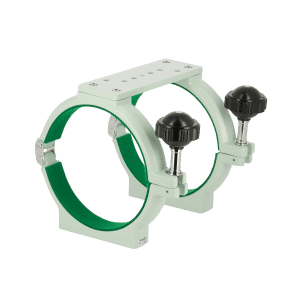
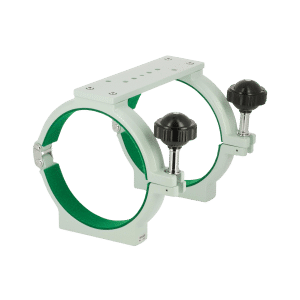
Takahashi 156WM: 156 mm double clamps

Takahashi 156WM double collars for TOA-130NS or NFB, as an alternative to the 156WT. Top plate included; separate bottom plate. Check the attachment to the mount, the load, and the balance.
CHF 532.59

Takahashi 156WT: 156 mm double clamps

Takahashi 156WT double collars for TOA-130NS or NFB, as an alternative to the 156WM. Upper plate included; separate L-shaped lower plate. Check the attachment to the mount, the load, and the balance.
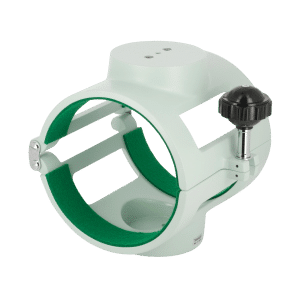
CHF 546.84
Documentation

Products in the same category

[category_menu_mobile]