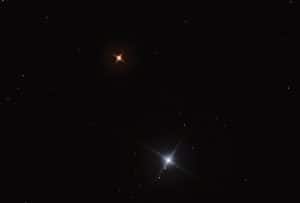
The New Moon on November 9, 2026, offers the darkest window of the month for deep-sky observing. From November 5 to 12, the Moon is absent: a full week without lunar light pollution. This is the perfect time to set up your telescope and photograph the major fall targets.
All the info at a glance
New Moon: November 9, 2026, at 7:02 a.m. UTC (8:02 a.m. CET)
Visible from: all of Switzerland and all of France
Equipment: 10×50 binoculars, 80–200 mm telescope, or wide-angle digital camera on a tripod
Astrophotography: 14–24 mm f/2–2.8 wide-angle lens, 10–20-second exposures, ISO 1600–3200 on a tripod; with tracking, exposures of 60 seconds or longer
Orion rises early in the evening and reaches its highest point around midnight
Andromeda reaches its highest point early in the night
The Pleiades rise late at night
Why the New Moon Changes Everything
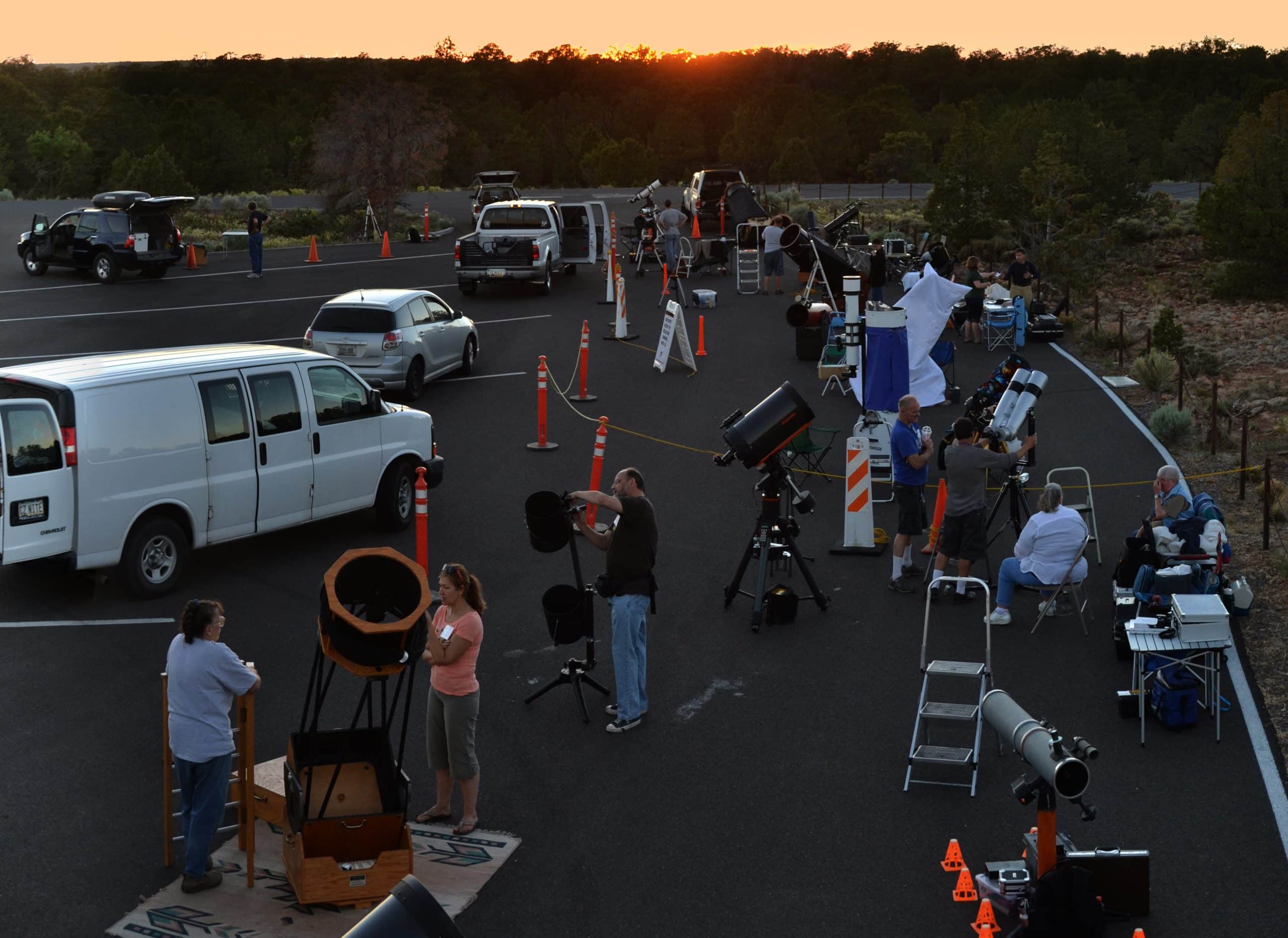
Under a truly dark sky, the Milky Way comes into view. The New Moon on November 9 provides ideal conditions. Credit: National Park Service, public domain.
The Moon is the most powerful source of light pollution in the night sky. A full Moon washes out the deep sky: nebulae fade, galaxies disappear, and the faintest stars are no longer visible. Conversely, a moonless night under a truly dark sky reveals the most spectacular sights of the deep sky: the Milky Way, nebulae, star clusters, and galaxies.
In November 2026, the New Moon occurs on the 9th at 7:02 a.m. UTC. The Moon will be absent from the sky from approximately November 5 through 12. That’s a full week of astronomically dark nights. Enjoy it.
November's Targets: What Are We Seeing?
M42: The Orion Nebula
The Orion Nebula is the most spectacular object in the fall sky. Visible to the naked eye as a fuzzy patch in Orion’s sword, it appears through binoculars as a greenish nebula with the Trapezium star cluster at its heart. Through an 80–100 mm telescope, details become apparent: the nebula’s dark wings, the four-star Trapezium, and its outward extensions.
Orion rises around 8 p.m. in November and reaches its highest point around midnight. It’s the ideal subject for a long-exposure astrophotography session.
M31: The Andromeda Galaxy
The Andromeda Galaxy is the closest galaxy to ours and is visible to the naked eye under a dark sky. It appears as an elongated patch in the constellation Andromeda. Through binoculars, it is clearly visible. Through a telescope, you can see its bright nucleus and spiral arms.
M31 reaches its highest point in the sky early in the evening in November. It’s the first target of the evening, before Orion rises high in the sky.
M45: the Pleiades
The Pleiades are the most famous star cluster in the sky. Seven stars are visible to the naked eye, and dozens more with binoculars. Through a telescope, the bluish reflection nebula surrounding the stars appears against a dark sky. The Pleiades rise late at night in November and reach their highest point around 2:00 a.m.
M1: The Crab Nebula
The Crab Nebula is the remnant of a supernova observed in 1054 by Chinese astronomers. It is located near Taurus, about 1° north of Zeta Tauri. With a magnitude of 8.4, it is invisible to the naked eye but visible through a 100-mm telescope as a faint, elongated patch.
How to Observe and Take Photos
With the naked eye and binoculars
To make the most of the dark sky, the easiest thing to do is to go outside under a sky far from the city. A pair of 10×50 binoculars is enough to spot M31, M45, and M42. The Milky Way is visible to the naked eye under a Bortle 1–3 sky.
Astrophotography without tracking (camera tripod)
A mirrorless or DSLR camera with a wide-angle lens (14–24 mm) at f/2 or f/2.8, mounted on a camera tripod. Exposures of 10 to 20 seconds at ISO 1600–3200. Photograph the Milky Way, the sky around Orion, and the Pleiades in a wide-angle shot. The Rule of 500 (500 / focal length in mm) determines the maximum exposure time before star trails appear.
Astrophotography with tracking (star tracker or tracking mount)
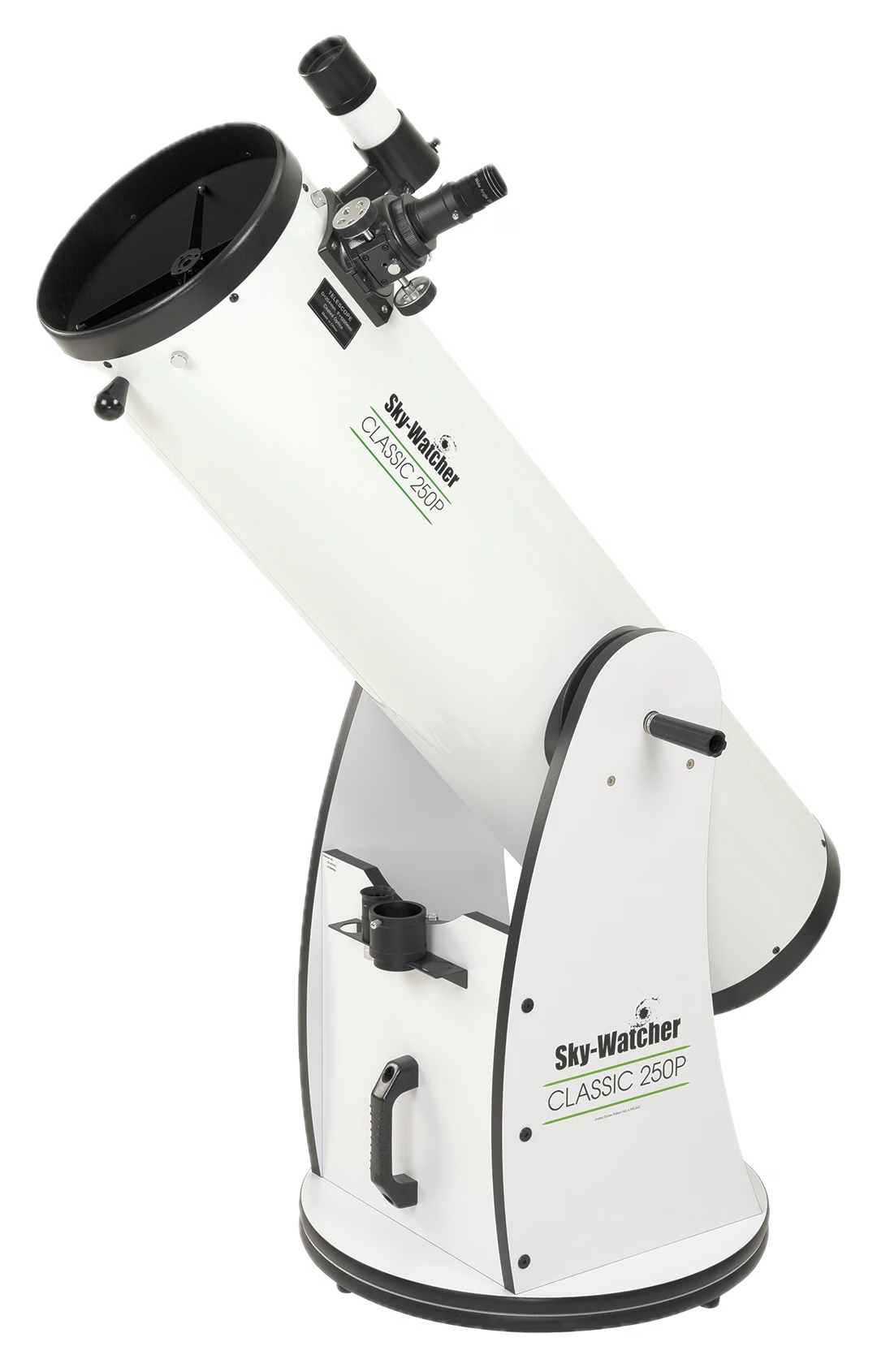
A telescope for nighttime use, under a dark sky. Credit: Sky-Watcher.
With a star tracker or an AM3N equatorial mount, exposure times can reach 60 seconds or more. You can photograph M42, M31, and M45 in greater detail. Exposures of 60–120 seconds at f/4–f/5, ISO 800–1600, using either a wide-field or small telescope, produce stunning results. An 80–100 mm telescope on a tracking mount (AM3N, Wave 100i, Star Adventurer GTi) is ideal.
Telescope Astrophotography (Deep Sky)
For nebulae and galaxies, an 80- to 200-mm telescope on a tracking mount, with an astrophotography camera (ASI2600MC, ASI533, ASI585) and a light pollution filter. Exposure times ranging from 60 to 300 seconds, stacked over 1–3 hours, reveal nebulae in all their depth. This is why the dark window of the new moon is essential: without the moon, the sky background is darker, the signal-to-noise ratio is better, and faint nebulae become visible.
The Window Calendar
Nov. 5–8 : A very thin crescent moon, setting early. The sky is dark as soon as night falls.
Nov. 9 : New Moon at 8:02 a.m. CET. The darkest night of the month.
Nov. 10–12 : A very thin crescent moon, visible at the end of the day. Dark skies until sunset.
Nov. 13 and beyond : The moon is getting bigger, and the sky is clearing up. Window finished.
The best night is the night of November 8 to 9 or November 9 to 10: the Moon is completely absent, and the sky is as dark as it can be.
Why shop at Deep Space Astronomy?
We're not just a retailer. We test, advise, and provide support.
Personalized Advice : We can advise you on choosing a deep-sky telescope based on your local sky conditions and your budget. By phone, WhatsApp, or by appointment in Nyon.
After-Sales Support : Do you have a question about tracking, stacking, or processing your images? We're here to help.
14-Day Return Policy : Not satisfied? Return the product within 14 days.
Secure payment : Twint, credit card, invoice, Apple Pay, Bitcoin. Pay in 3 or 4 installments with no fees.
Free shipping in Switzerland Starting at CHF 200. Free pickup in Nyon.
This article is based on forecasts from Sterngucker.de (“Night Sky November 2026”), Digital Camera World (“Astrophotography November 2026”), and National Geographic (“November 2026 Night Sky Events”). The positions and magnitudes are verified for November 2026 at 47°N.
To provide the best experiences, we use technologies such as cookies to store and/or access device information. Consenting to these technologies will allow us to process data such as browsing behavior or unique IDs on this site. Failure to consent or withdrawal of consent may adversely affect certain features and functions.
Functional
Always active
Storage or technical access is strictly necessary for the legitimate purpose of enabling the use of a specific service explicitly requested by the subscriber or user, or for the sole purpose of transmitting a communication over an electronic communications network.
Preferences
Storage or technical access is necessary for the legitimate purpose of storing preferences not requested by the subscriber or user.
Statistics
Storage or technical access used exclusively for statistical purposes.Storage or technical access which is used exclusively for anonymous statistical purposes. In the absence of a subpoena, voluntary compliance by your Internet service provider or additional third-party records, information stored or retrieved for this sole purpose generally cannot be used to identify you.
Marketing
Storage or technical access is necessary to create user profiles in order to send advertisements, or to track the user on a website or on several websites with similar marketing purposes.