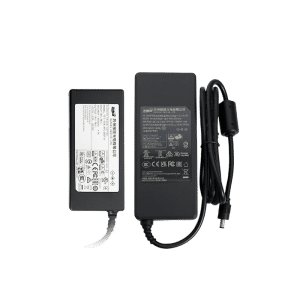
More products from the brand :ZWO

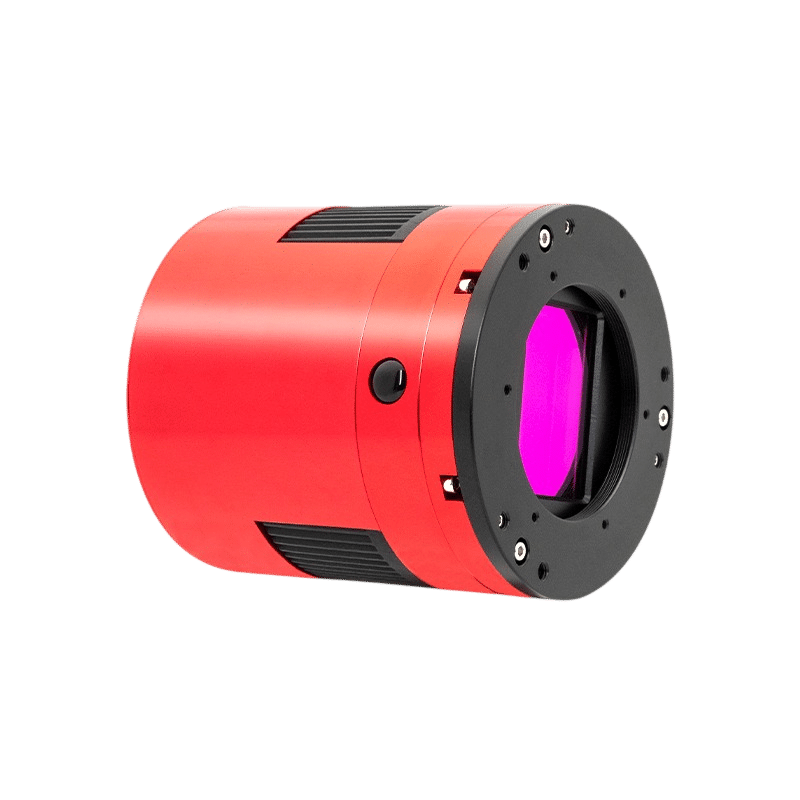
ZWO ASI2400MC Pro

The ASI2400MC Pro is a full-frame cooled color camera that combines a 24-megapixel Sony IMX410 sensor with 5.94 µm pixels. It is designed for wide fields of view with a 24 × 36 mm optical field of view, a maximum capacity of 100,000 electrons, and an HCG mode with a gain of 140.

CHF 2'428.00incl. Swiss VAT

Part Number ZWO-A142352

In stock
Estimated shipping time: 2 to 4 days

Free shipping in Switzerland on orders of 200 CHF or more
14 days to request a return
Credit Card · TWINT · PayPal · Invoice · Klarna
Free pickup in Nyon · credit card or cash
5 Recommended Products for This Model
Product description

Product description

ZWO ASI2400MC Pro: Full-frame color imaging for wide fields of view

The ASI2400MC Pro combines a 24-megapixel back-illuminated Sony IMX410 sensor with a 36 × 24 mm imaging area. Its advantage lies not only in producing a large image: at the same focal length, this full-frame sensor captures more of the sky than a smaller sensor. It is well-suited for extensive nebulae, star fields, and compositions featuring multiple objects, provided the instrument delivers a sufficiently large and well-corrected image circle.

Large pixels, rather than a race for higher resolution

The 5.94 µm pixels represent a different choice from that of cameras with small photosites. They provide less detailed sampling at the same focal length, which can be advantageous with a longer focal length; with a very short focal length, you should instead check whether the stars will remain sufficiently resolved for your purpose. Resolution alone is therefore not a sufficient criterion for making a choice. The color sensor records color information in each series of exposures: no sequence of RGB shots is needed to obtain a color image, unlike with a monochrome camera.

Exposing without confusing capacity and gain setting

ZWO specifies a maximum capacity of 100,000 electrons and 14-bit conversion. This headroom helps capture bright areas without causing stars to become oversaturated. Monitor their levels during the first few exposures. HCG mode activates at a gain of 140; the manufacturer reports a significant reduction in readout noise while largely preserving the dynamic range. The advertised minimum value of 1.1 electrons and the maximum capacity should not be interpreted as performance levels achievable simultaneously at all gain settings.

Paying attention to field edges and thermal stability

With a diagonal of 43.3 mm, it is necessary to check the corrector, the clear passage of the connectors and filters, and the alignment of the optical train. Even a properly centered assembly may still exhibit vignetting or distorted stars in the corners. Flat frames correct for variations in brightness, not for a lack of optical correction. Use the focus distance specified by your corrector, rather than applying a one-size-fits-all distance to all instruments.

The two-stage thermoelectric cooling system is rated to provide a temperature difference of approximately 35 °C below ambient under ZWO test conditions at 30 °C. This is not a guaranteed absolute temperature: choose a setpoint that remains stable throughout the night. A 5-watt heating element warms the protective window and can be disabled via software. The amp-glow-free design eliminates this unwanted electronic glow, but does not eliminate the need for calibration images or sky gradient checks.

Preparing a Full-Format Installation

The USB 3.0 connection is used to transfer images; an external power supply is required. ZWO recommends 12 V, 3 to 5 A, with a 5.5 × 2.1 mm connector and center-positive polarity. This camera is particularly well-suited for users who already have optics and a mount capable of utilizing the full frame and who wish to focus their session on direct color acquisition rather than managing multiple filtered channels.

Documentation and Compatibility: ZWO official data sheet.
Back to the sections
Frequently asked questions

Frequently asked questions

What is the ZWO ASI2400MC Pro designed for?

The ZWO ASI2400MC Pro is designed for deep-sky photography using long exposures: nebulae, galaxies, and clusters. Its cooling system (35 °C below ambient temperature) keeps thermal noise very low during exposures lasting several minutes. With its 5.94 µm pixels, it pairs well with instruments having focal lengths of approximately 600 to 1,250 mm (1 to 2″ per pixel). In color, a single series of exposures produces the image; with a double-band filter, it can capture emission nebulae even under light-polluted skies.

What sets the ZWO ASI2400MC Pro sensor apart?

The Sony IMX410 combines a full-frame sensor (36 × 24 mm) with large 5.94 µm pixels and a well capacity of 100 ke⁻: bright stars saturate much less, and the 24.5 Mpx files remain lightweight. It has no amp glow and is well-suited for medium to long focal lengths.

What power supply is required for the ZWO ASI2400MC Pro?

The cooling system requires an external 12 V DC power supply; 3 A is recommended (5.5 × 2.1 mm connector, center positive). It is not included with the camera: we recommend the'Pegasus Astro 12 V 10 A power supply (2.1 mm plug). In the field, a Pegasus Astro unit like the Pocket Powerbox Advance It also powers the mount and the heating elements from a single source. Without a 12-volt power supply, the camera operates via the USB cable, but without cooling.

What backfocus setting should be used with the ZWO ASI2400MC Pro?

The camera's back focus is 17.5 mm. Mount: M54 × 0.75. If using a corrector or reducer that requires 55 mm, make up the difference with extension rings, taking into account the filter wheel or filter drawer, if present.

Which filter should I use with the ZWO ASI2400MC Pro under a light-polluted sky?

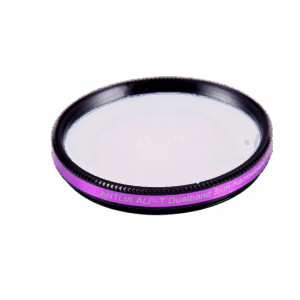
We recommend the Antlia ALP-T 5 nm Hα/OIII filter : This dual-band filter isolates the Hα and OIII lines in emission nebulae and significantly reduces light pollution. Get it in a 2″ mount—the ideal size for this large sensor. For galaxies, reflection nebulae, and clusters, the Antlia Quad Band filter reduces light pollution while transmitting the Hα, Hβ, OIII, SII, and NII lines.

How do I set up autoguiding with the ZWO ASI2400MC Pro?

With a ZWO OAG Optical Splitter and a small guidance camera like the ZWO ASI220MM Mini, you guide through the main telescope. A guide scope such as the'Askar 32 mm is the simplest alternative.

Can the window of the ZWO ASI2400MC Pro fog up?

An anti-fog heating element is built into the front of the sensor window. It prevents fogging and frost when the sensor is cooled well below room temperature.

Does the ZWO ASI2400MC Pro have a USB hub?

Yes: A built-in USB 2.0 hub allows you to connect a filter wheel, a guide camera, or a focuser directly to the camera, reducing the number of cables running to the computer.

Where can I find the ZWO ASI2400MC Pro manual?

The manufacturer's manual (in English) is available here: ZWO ASI2400MC Pro Manual (PDF).

Technical specifications

Technical specifications

Technical specifications

Sensor
Sony IMX410
Color / black-and-white
Color
Sensor Size
Full format
Sensor Dimensions
36 × 24 mm
Sensor diagonal
43.3 mm
Resolution
24.5 MP
Resolution in pixels
6072 × 4042
Pixel size
5.94 µm
Shutter
Roll-up
ADC Converter
14 bits
Playback noise
1.1 e⁻
Well Capacity
100 ke⁻
Maximum quantum efficiency
80 %
Cooling
Yes
Temperature difference (ΔT)
35 °C
Anti-fog heating
Yes
Buffer memory
512 MB DDR3
Interface
USB 3.0 / USB 2.0
Built-in USB hub
Yes (USB 2.0)
Speed
8 frames per second
Backfocus
17.5 mm
Threads / Connections
M54 × 0.75
Protective window
IR-cut
Case diameter
90 mm
Camera weight
700 g
Power supply
12 V DC, 3 A recommended (5.5 × 2.1 mm connector, positive center)
Power supply included
No
Camera Uses
Deep sky
Recommended Products (5)

Recommended Products (5)

How to Care for Your Instrument

Here are a few accessories we've selected for this model, depending on your needs.

ZWO OAG-L

OAG-L Splitter: Check the connections and the draw using the wheel. Guide camera sold separately.

CHF 152.10
Documentation

Products in the same category

[category_menu_mobile]