On September 23, 2026, at 00:05 UTC, the Sun crosses the celestial equator heading south. It’s the fall equinox: the nights are getting longer, temperatures remain mild, and the astronomical observation season resumes under ideal conditions. It’s not yet too cold to stay outside, and there’s enough darkness to observe. Here is a list of what awaits you this fall, as seen from Switzerland, including visible planets, their altitudes, must-see events, and astrophotography ideas for every level of equipment.
The Equinox: What Changes
At the equinox, the Sun passes exactly over the celestial equator. Day and night are of equal length—hence the name. From that point on in the Northern Hemisphere, the nights grow longer rapidly: at our latitudes, we gain about 3 minutes of night per day. In late September, astronomical night (when the Sun is 18 degrees below the horizon) begins around 9:30 p.m. in Switzerland. By late October, it begins as early as 7:00 p.m. In December, it begins as early as 5:30 p.m.
Another advantage of fall is the temperature. You can still observe without gloves, without getting too hot, and without worrying about frost forming on your telescope’s optics. In October in Switzerland, temperatures range from 5 to 15 degrees at night—perfect for spending two or three hours outside without getting cold. In November, you’ll need to start bundling up, but the nights are long and the fall targets are back.
Planets Visible from Switzerland This Fall
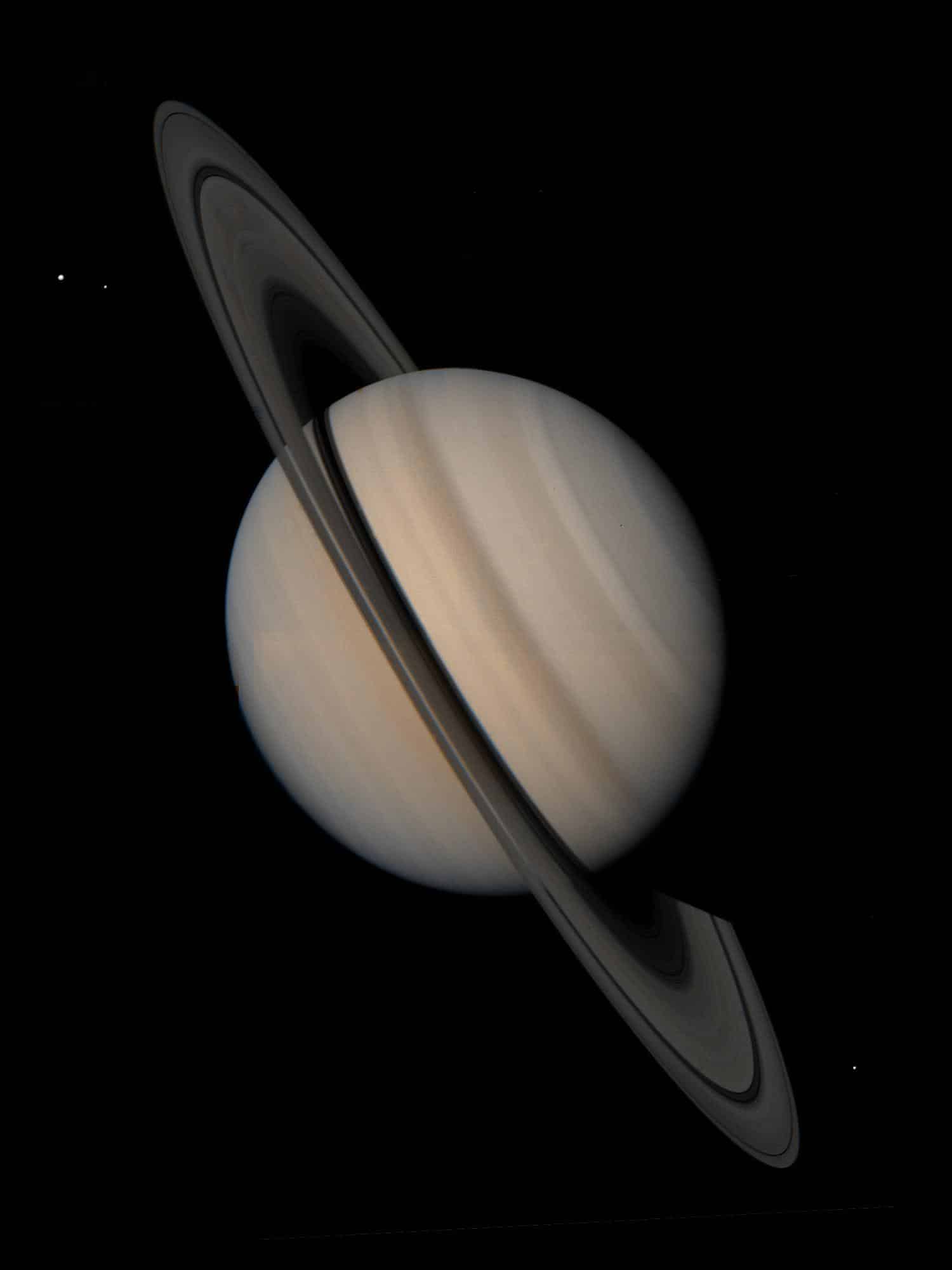
Saturn: The Star of the Season
Saturn reaches opposition on October 4, 2026, in the constellation Cetus. This is the planetary event of the fall. At opposition, Saturn is visible all night long, at its highest point in the sky and at its brightest (magnitude +0.1).
From Switzerland (~47 degrees N), Saturn reaches a maximum altitude of about 38 degrees directly south. This is ideal for a telescope—not too high to avoid a stiff neck, high enough to overcome most atmospheric absorption. The rings are the must-see attraction. With a 150 mm telescope, you can make out the Cassini Division. With a 200 mm telescope or larger, you begin to see the shadows cast by the rings onto the planet.
Saturn will remain visible in the evening through December, gradually sinking lower in the sky.
Jupiter: in the morning, but getting closer
Jupiter is a morning planet in September and October 2026. It rises around midnight in early September, then earlier and earlier. On September 24, Jupiter moves from Cancer into Leo. Magnitude -1.9.
From Switzerland, Jupiter reaches an altitude of about 50 degrees in late fall (early November). It is an excellent target for observing the Galilean moons and transits. On November nights, Jupiter is high in the sky before dawn, with the four Galilean moons clearly separated.
Jupiter reaches opposition on February 9, 2027. So this fall, we’re in for an early-morning observation opportunity.
March: the morning, as it dawns
Mars is a morning planet, currently rising. With a magnitude of +1.1 in late September, it is near Castor and Pollux in Gemini. On September 25, Mars aligns with the two stars. In October, Mars passes through the Beehive Cluster (M44) on October 10–12—a beautiful event for observation and astrophotography.
From Switzerland, Mars reaches an altitude of about 51 degrees starting in late November. It will be in opposition on January 27, 2027. This fall, it’s a target to watch in the early morning, but it will rise higher in the sky and grow brighter as the weeks go by.
Uranus: The Hidden Yet Accessible One
Uranus reaches its maximum culmination of 58 degrees starting on September 25. Magnitude +5.7, near Omega Tauri. Uranus is visible to the naked eye under a very dark sky, but binoculars or a telescope are needed to distinguish it from the stars. It reaches opposition on November 25.
From Switzerland, 58 degrees of altitude is very high—higher than Saturn or Neptune. It’s an easy target for a telescope with a 100-mm aperture or larger, where it appears as a small blue-green disk.
Neptune: Visible All Night Long
Neptune is in opposition on September 26—see our dedicated article. Magnitude +7.8 in Pisces, culminating at 37 degrees as seen from Switzerland. Visible through binoculars as a point, and through a 150-mm telescope as a blue disk measuring 2.4 arcseconds.
Venus and Mercury: Challenging
Venus is an evening planet, but it sets less than an hour after the Sun in late September. It is at its brightest (magnitude -4.5), very low in the western twilight. Difficult to see from our latitudes. Venus returns as a morning planet starting in late October (inferior conjunction on October 24).
Mercury reaches its greatest eastern elongation on October 12, but remains very low on the western horizon. Difficult to observe from Switzerland.
Astronomical Events of Fall 2026
September
- September 23: Fall equinox at 00:05 UTC. The Sun crosses the celestial equator heading south.
- September 26: Neptune in opposition. Magnitude +7.8 in Pisces, 37 degrees of culmination as seen from Switzerland.
- September 26: Harvest Moon at 4:49 p.m. UTC. The full moon closest to the equinox.
- September 28–30: The waning gibbous Moon passes near the Pleiades and Aldebaran.
October
- October 4: Saturn in opposition. Magnitude +0.1 in the constellation Cetus. 38 degrees of culmination from Switzerland. The planetary event of the fall.
- October 5: The Moon visits Mars at dawn.
- October 10–12: Mars passes through the Beehive Cluster (M44). A great shot for astrophotography: Mars and the cluster in the same frame.
- October 13: Vesta reaches opposition. The asteroid shines at magnitude +6.0 in the constellation Cetus.
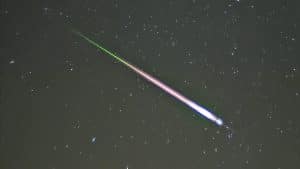
- October 21–22: Peak of the Orionids. A meteor shower originating from Halley’s Comet. The waxing gibbous Moon will interfere, but the Orionids are active from October 2 through November 7.
- October 28: Lunar occultation of the Pleiades.
November
- November 2: Morning alignment featuring Regulus, Jupiter, Mars, the waning gibbous Moon, and the Beehive Cluster. A morning panorama worth photographing.
- November 25: Uranus in opposition. Magnitude +5.6 in Taurus, 58 degrees of culmination.
- November 24: Supermoon.
- November 17: Peak of the Leonids. Moderate meteor shower, about 15 meteors per hour.
December
- December 14: Peak of the Geminids. One of the best meteor showers of the year, with up to 120 meteors per hour. The waning crescent Moon sets around 9:00 p.m.—ideal conditions.
- December 21: Winter solstice. The longest nights of the year.
- December 24: Supermoon.
Observation List and Astrophotography Ideas
With a beginner's telescope (150 mm or equivalent)
- Saturn and its rings—the opposition on October 4 is the perfect time. Look for the Cassini Division.
- Jupiter and its Galilean moons—in the early morning before dawn, starting in late October. Io, Europa, Ganymede, and Callisto change positions every night.
- Mars and the Beehive Cluster (M44) – October 10–12, Mars passes through the cluster. A wide field of view when viewed through a telescope or binoculars.
- Neptune—the blue disk at 2.4 arcseconds, 37 degrees in altitude. First locate Saturn, then look 9 degrees to the west-southwest.
- Uranus – magnitude +5.7, 58 degrees from the meridian. A blue-green disk at 150x magnification.
In astrophotography (smart telescope or basic setup)
- M31 (Andromeda Galaxy) – the highlight of the fall. It rises high in the sky starting in September, reaching a maximum altitude of over 70 degrees as seen from Switzerland. Visible with a smart telescope (Seestar S50, DWARF 3) or a 50–80 mm setup.
- M33 (Triangulum Galaxy) – smaller than M31 but visible at the same time. Try observing it under a dark sky.
- The Perseus Double Cluster (NGC 869 / NGC 884)—two bright clusters side by side. A delight to view through a telescope, and an easy wide-angle shot for astrophotography.
- M45 (Pleiades) – rises in the early evening in October. Take a wide-angle shot with a DSLR or a smart telescope in Milky Way mode. The Moon will pass close to the Pleiades on October 28 (occultation).
- NGC 7000 (North America Nebula) – near Deneb. Visible with a smart telescope using an Ha-OIII filter. Reaches its highest point in the sky in September and October.
- The Field of Mars and the Hive Swarm—October 10–12. A wide-angle shot taken with a smart telescope in wide-field mode or a telephoto lens.
Visual observation with the naked eye
- The Milky Way in the fall—still visible in September low on the southwestern horizon—is gradually setting. Best viewed before the end of October.
- The Pleiades—rise late in the evening in September and are high in the sky in November. The easiest star cluster to see with the naked eye.
- The Double Cluster in Perseus—visible to the naked eye as a fuzzy patch between Perseus and Cassiopeia. Through binoculars, it appears as two distinct clusters.
- The Geminids—December 14. The best meteor shower of the year-end season. No equipment needed—just a chair and a blanket.
- Morning Alignment on November 2—Regulus, Jupiter, Mars, and the Moon aligned in the sky before dawn. A sight to see and photograph with a smartphone or DSLR.
Why Fall Is the Best Season for Astronomy in Switzerland
Three reasons. First, the nights are getting longer: we go from 8–9 hours of darkness in September to more than 12 hours in December. Second, it’s not too cold yet: in October, temperatures range from 5 to 15 degrees at night, which is comfortable for stargazing. Finally, fall targets are among the most beautiful: M31, the Pleiades, the Double Cluster, and Saturn and Jupiter in succession. It’s also the season when smart telescopes really shine—long nights, targets high in the sky, and temperatures that don’t drain the battery.
Enjoy them. September nights are still mild. October nights are the most comfortable. November and December nights are long, but you’ll need gloves. But they’re all better than summer nights, when the sky never really turns dark.
Sources : Sky at Night Magazine – Planets Visible in 2026 (Pete Lawrence); ; EarthSky – September Equinox 2026 ; NASA – Astronomical Events in 2026 ; Royal Museum Greenwich – Highlights 2026.
See also on Deep Space Astronomy: Neptune in opposition on September 26, 2026 ; Barlow and backfocus
Signature: CBurkhalter