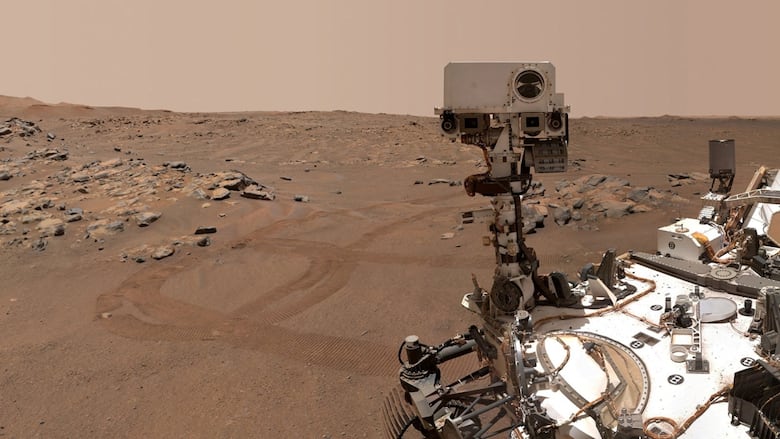
NASA announced in early September 2025 that it had detected what it described as the signs of life the most promising to date on the Red Planet . This revelation follows the in-depth analysis of a rock sample taken in July 2024 by the Perseverance rover in the Jezero crater - the dried delta of an ancient Martian lake reputed to be favourable for the search for traces of life.
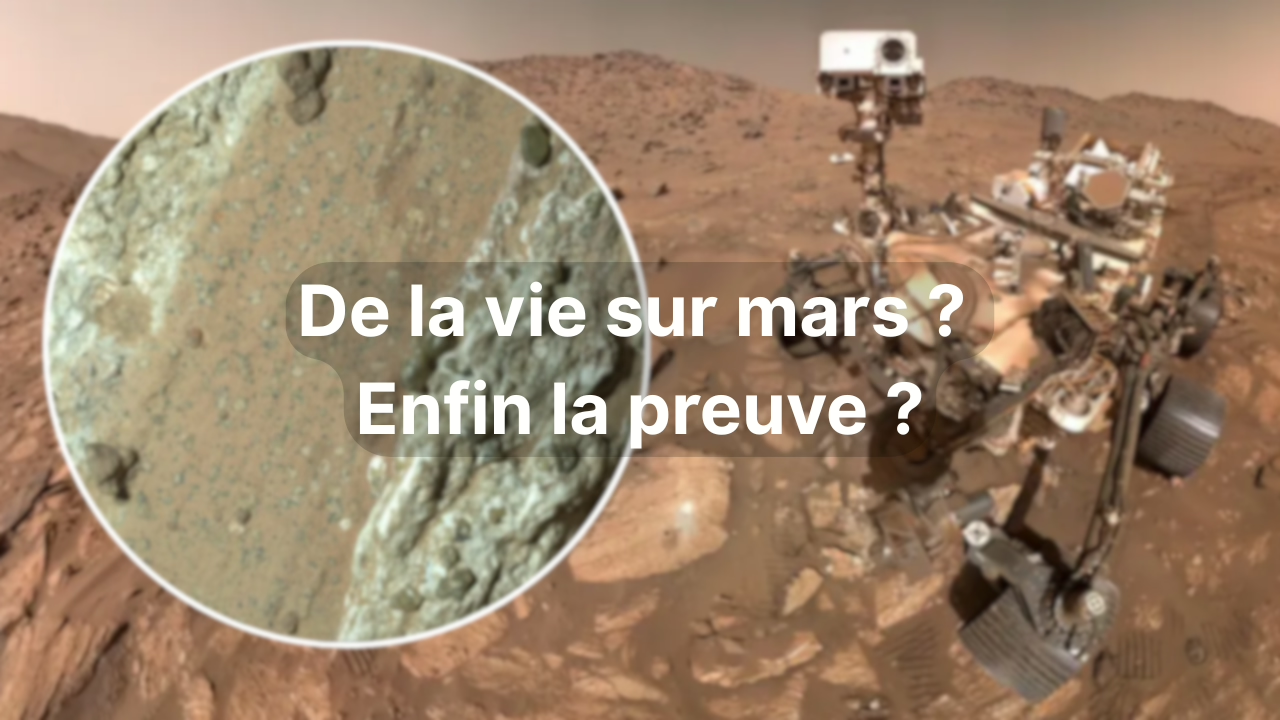
The rock in question, nicknamed "Cheyava Falls", features curious circular spots reminiscent of leopard skin, as well as unusual concentrations of certain minerals and organic molecules . On Earth, such patterns and chemical compounds are often the result of the activity of micro-organisms, suggesting that reactions associated with microbial life may have occurred in this Martian sediment some 3 to 4 billion years ago . However, the researchers insist that, at this stage, it's only a question of potential biosignatures - indicators that may have a biological origin, but which require further data before concluding that life is present. In other words, no direct evidence of Martian life has yet been found, despite the measured enthusiasm generated by this discovery.
Scientific analysis: a major step forward and the need for caution
From a scientific point of view, these results, published in the journal Nature are a significant advance for Martian exobiology. They suggest that Mars may have harbored conditions conducive to life over a longer period than previously thought, as this potential biosignature has been detected in sedimentary rocks that are relatively stable. young people for the red planet. Perseverance's instruments have identified two minerals in particular - the vivianite (iron phosphate) and greigite (iron sulfide) - whose association in the form of speckled "leopard" spots is considered a possible footprint microbial activity. These rocks turned out to be rich in clay, organic carbon, sulfur, oxidized iron and phosphorus: a veritable cocktail which could have provided a source of energy for Martian micro-organisms once buried in the mud of an ancient lake. In other words, if life ever existed on Mars, this kind of geochemical configuration is exactly the type of fossil signature it could leave in the rock.
But be careful These same markers can also be explained by purely geological processes. "There are abiotic processes capable of mimicking the activity of life, and we can't rule them out on the basis of the rover's data alone", Joel Hurowitz, planetologist and lead author of the study, reminded us when announcing the results . Indeed, certain chemical reactions (involving a heat source or organic compounds, for example) could theoretically produce these minerals without the intervention of living organisms. Several outside experts also qualified NASA's statement, saying that "we can't say at this stage that the life hypothesis is the most likely", and urging against premature hype until more solid evidence is available. In science, even the most intriguing clues must be confirmed by irrefutable evidence - hence the need for further investigation before any definitive conclusion can be drawn on the question of Martian life.
Example of "leopard spots" observed on a Martian rock outcrop by the Perseverance rover. These dark circular patterns contrast with the lighter matrix of the rock. On Earth, similar structures often appear in sediments transformed by microbes, but non-biological processes can also produce similar effects. .
Future prospects for Mars exploration
The next crucial step will be to confirm the origin of these potential biosignatures. To achieve this, scientists are counting on the future mission of return of Mars samples - currently being prepared by NASA and its partners - which will repatriate the precious cores collected by Perseverance to Earth. Only in-depth analysis in terrestrial laboratories will enable us to determine with any certainty whether micro-organisms actually lived in these rocks, or whether nature simply created them. lures life-like geochemicals . In the meantime, the Perseverance rover continues to explore the Jezero crater in search of further clues, and keeps its samples sealed for later study. Other missions are also on the horizon - whether new robots or, in the longer term, possible manned missions - testifying to the enduring enthusiasm for the Red Planet.
Without being overly triumphalist, this recent discovery provides grounds for cautious optimism. It shows that the search for life on Mars is progressing step by step, with each new discovery enriching our understanding of the planet. Should these clues one day be confirmed as evidence of past microbial life, it would be a historic discovery for mankind. In the meantime, Mars remains a mystery, and Martian exploration continues with enthusiasm and method, guided by a fascinating question that remains open: are we alone in the Universe?
To provide the best experiences, we use technologies such as cookies to store and/or access device information. Consenting to these technologies will allow us to process data such as browsing behavior or unique IDs on this site. Failure to consent or withdrawal of consent may adversely affect certain features and functions.
Functional
Always active
Storage or technical access is strictly necessary for the legitimate purpose of enabling the use of a specific service explicitly requested by the subscriber or user, or for the sole purpose of transmitting a communication over an electronic communications network.
Preferences
Storage or technical access is necessary for the legitimate purpose of storing preferences not requested by the subscriber or user.
Statistics
Storage or technical access used exclusively for statistical purposes.Storage or technical access which is used exclusively for anonymous statistical purposes. In the absence of a subpoena, voluntary compliance by your Internet service provider or additional third-party records, information stored or retrieved for this sole purpose generally cannot be used to identify you.
Marketing
Storage or technical access is necessary to create user profiles in order to send advertisements, or to track the user on a website or on several websites with similar marketing purposes.

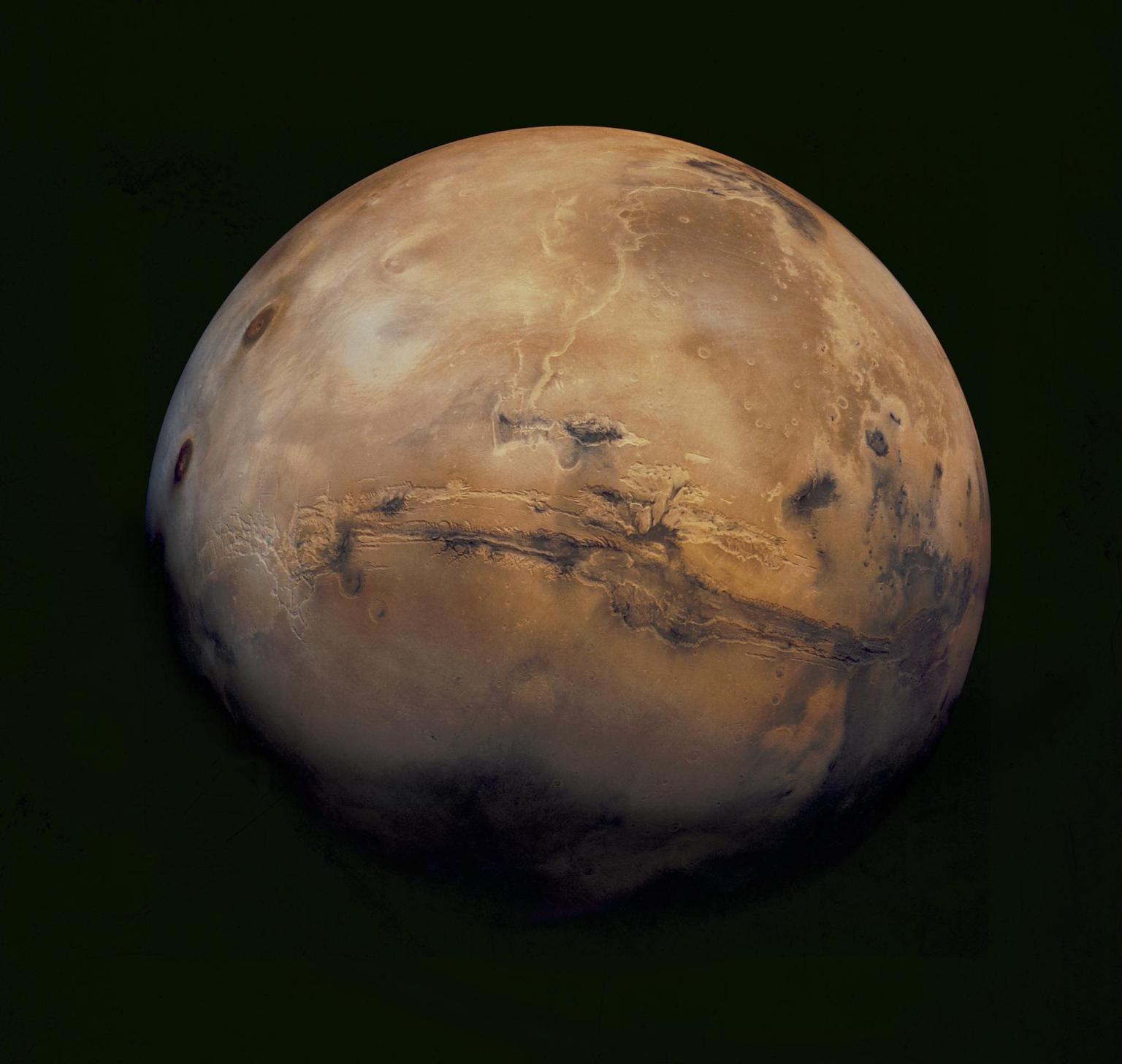

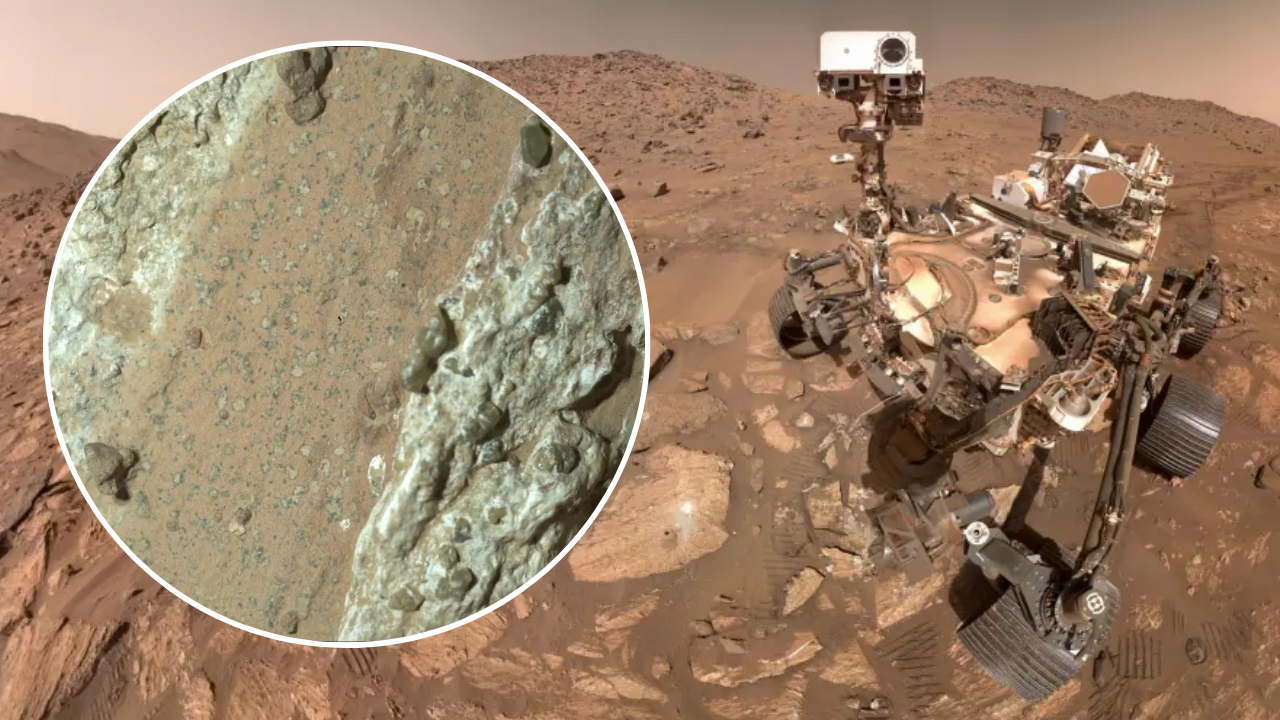 From a scientific point of view, these results, published in the journal Nature are a significant advance for Martian exobiology. They suggest that Mars may have harbored conditions conducive to life over a longer period than previously thought, as this potential biosignature has been detected in sedimentary rocks that are relatively stable.
 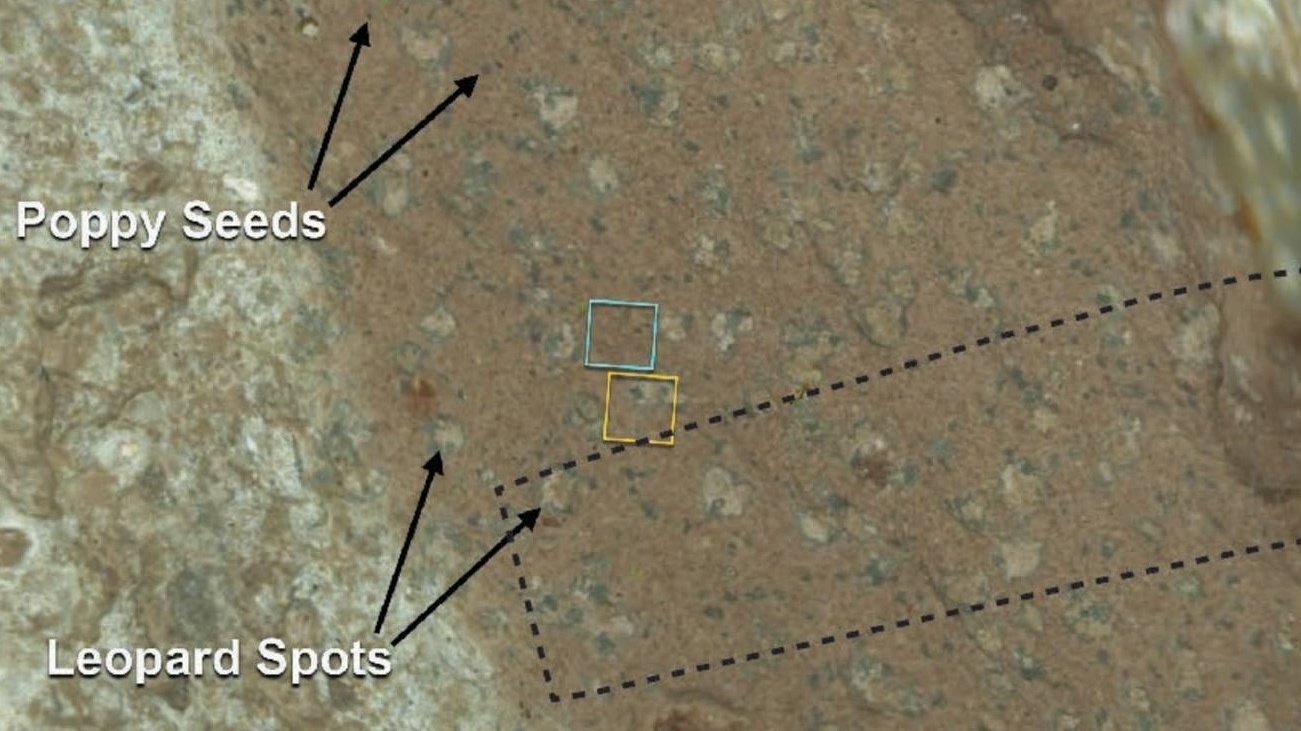 Example of "leopard spots" observed on a Martian rock outcrop by the Perseverance rover. These dark circular patterns contrast with the lighter matrix of the rock. On Earth, similar structures often appear in sediments transformed by microbes, but non-biological processes can also produce similar effects. .