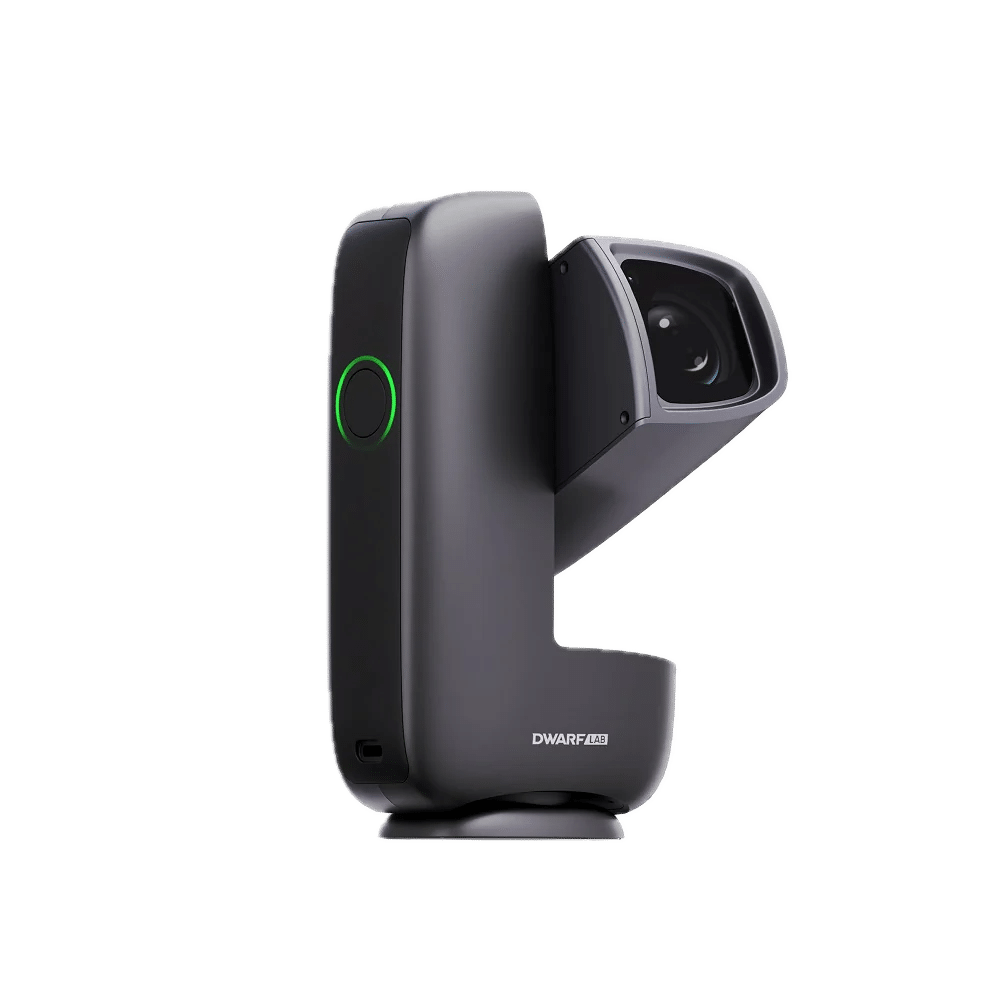
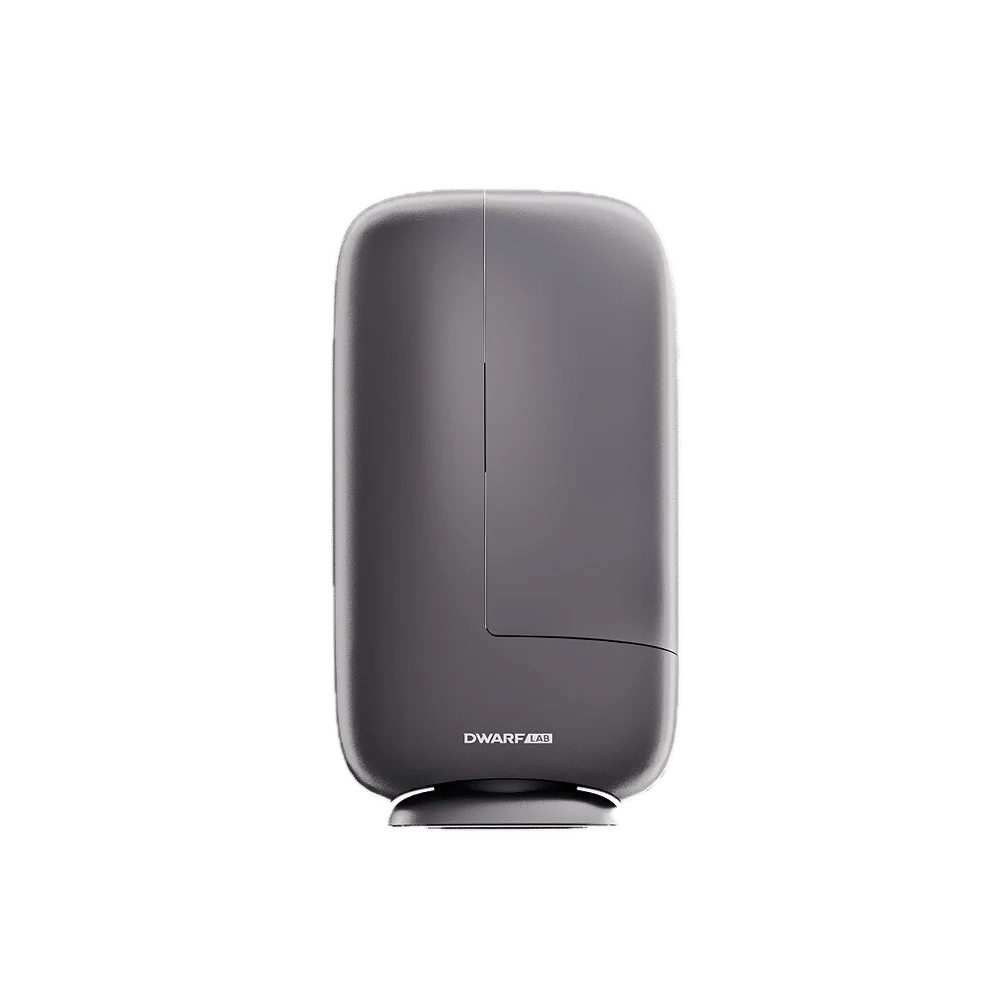
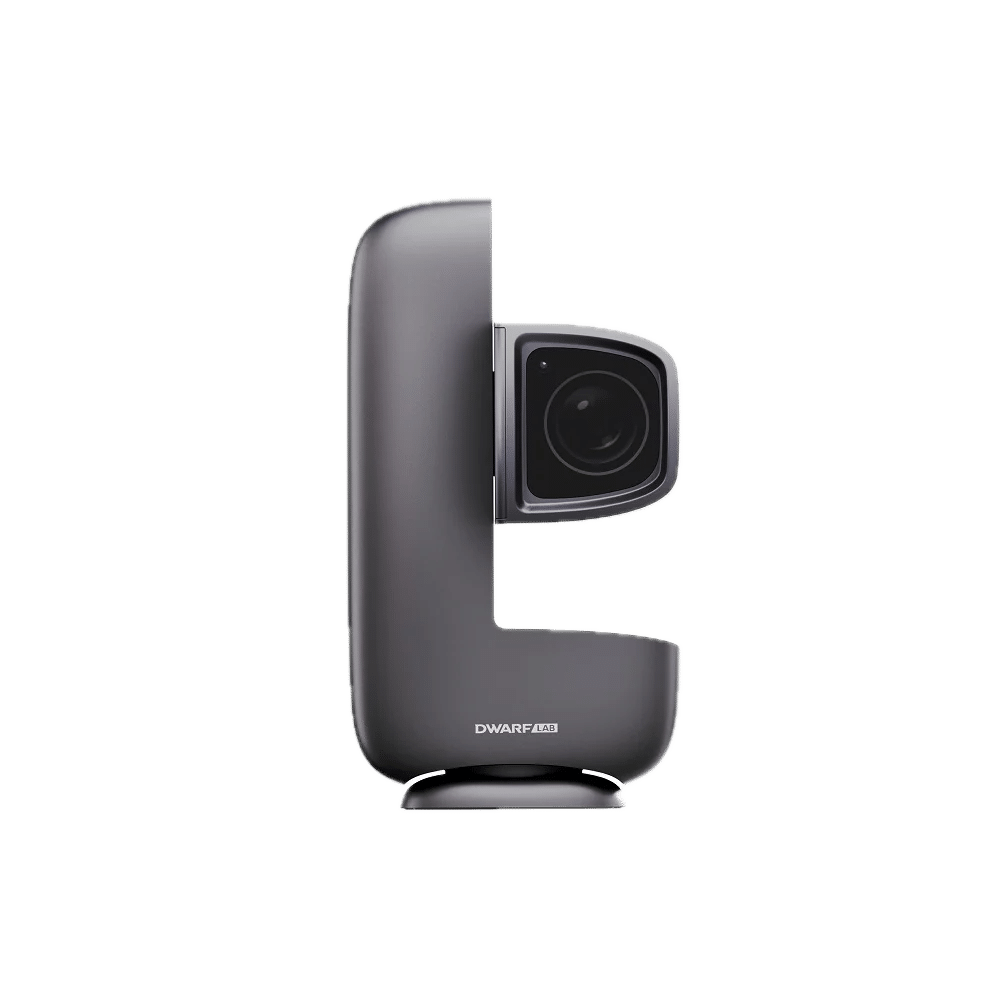
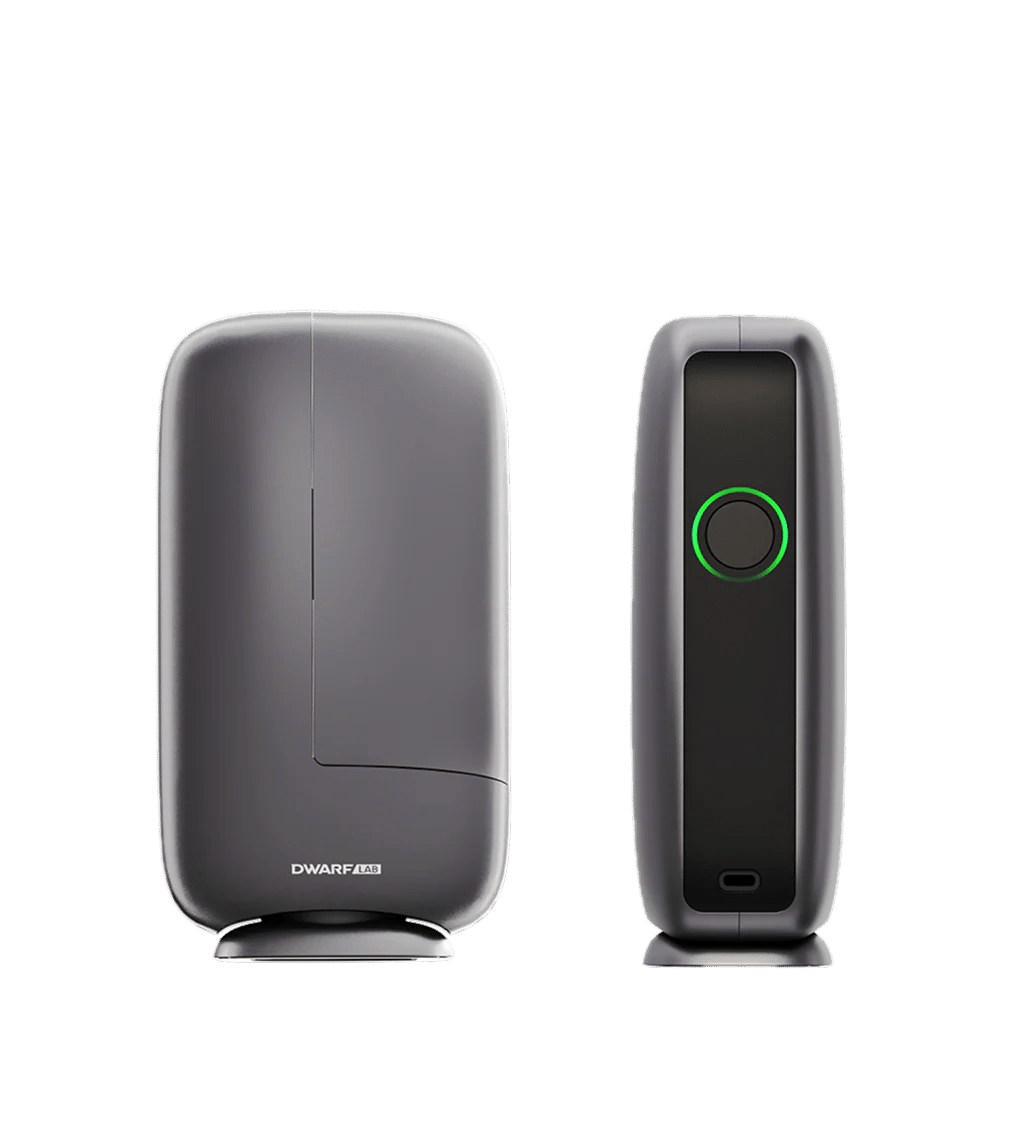
Visit DWARF Mini Smart Telescope is an ultra-compact, intelligent astrophotographic telescope that combines optics, sensor, motorized mount and automated image processing in a single package weighing just 840 g. It lets you explore the deep sky, the Moon, nebulae or even galaxies with minimal installation and control via smartphone.
Ultra-portable and quick to use
Designed to be taken anywhere, the DWARF Mini can be placed on a stable surface or a standard photo tripod, and is ready for use in just a few minutes. Its exceptional size - about half the volume of conventional models - and its light weight make it an ideal travel companion for nomadic astronomy or astrophotography on the move.

Optics and sensor
- Main lens 150 mm focal length, f/5, 30 mm aperture
- Wide-angle secondary lens 6.7 mm, 45 mm full-frame equivalent
- Sensors Sony STARVIS 2 IMX662 (main) and OmniVision OV02K10 (wide-angle)
- Image resolution 1920×1080 px (≈ 2 MP)
- View angles telephoto lens ≈ 2.45°×1.20°, wide-angle lens ≈ 50°×25°.
These optical combinations make it possible to capture deep-sky objects while offering a wide-field perspective for wide-field images of the night sky.

Key functions
- Automatic GoTo & motorized tracking The telescope locates and tracks celestial targets via the DWARFLAB application.
- Capture modes photo, video, astro, burst, time-lapse.
- Tracking modes : Classic Alt-Az and equatorial mode (EQ) for long exposures of up to ~90 s per exposure.
- Integrated filters Astro broadband, dual narrowband (Hα/ OIII) and dark shutter.
- Integrated image processing live stacking, calibration, processing and export of final results from the app.

Connections, storage and autonomy
- Connectivity Wi-Fi 2.4 GHz and 5 GHz + Bluetooth for discovery.
- Internal storage 64 GB on-board for complete imaging sessions.
- Built-in battery Battery: 7000 mAh, up to ~4 h of autonomous imaging, with USB-C charging. Perfectly supports the addition of a powerbank.
Connection is via the DWARFLAB app on smartphone or tablet (iOS/Android), which manages image capture, control and processing.
User experience
According to several users and feedback from specialist forums, the DWARF Mini is..:
- Appreciated for its extreme portability and ease of use.
- Capable of producing images of the Moon, nebulae, the Milky Way or the Andromeda galaxy from remote areas of sky.
- Quite easy to use for beginners, thanks to the automation and processing built into the application.
- On the software side, some users mention that the application offers a great deal of control, but can be perceived as more «technical» than some alternatives, with additional manual steps to refine shots.
Who is it for?
The DWARF Mini is designed for :
- Beginners to astrophotography who want to obtain images of the sky without installing complex equipment.
- Enthusiasts who want a second ultralight instrument for travel and improvised sessions.
- Mobile users and travellers for whom every gram counts.
It doesn't replace a large equatorial mount with a powerful optical instrument for advanced astrophotography, but it does open up a simple and accessible way to capture celestial objects with minimum effort. Ideal for data acquisition!
Box contents
- DWARF Mini telescope
- USB-C cable
- Solar filters
- A cleaning cloth
Note: no rigid tripod is included, allowing users to choose their preferred support.
Options (important!):
- Dwarf Mini without tripod (no equatorial mode)
- Dwarf mini + mini tripod (opens up the possibility of long exposures) -> important in my opinion
- Complete «Dark night» set: Dwarf + Tripod + Baseus EnerFill 20’000 mAh external battery -> everything you need to take some great photos 🙂
My opinion
Personally, I think it's the ideal smart telescope for getting started on a budget. In its naked state, you can already use it and learn a whole lot about astrophotography. It's a great way to get started, and a lot of fun. The next step is to switch to equatorial mode. This will enable you to make longer exposures and thus improve the quality of your images. And then, the aim is to export the raw images and learn how to process them yourself, so as to have total control over the rendering. In short, there's plenty to do!
Quality-wise, it's DwarfLab: excellent. It's beautiful, it's light, it'll make a splash with your friends for sure 🙂
A few images