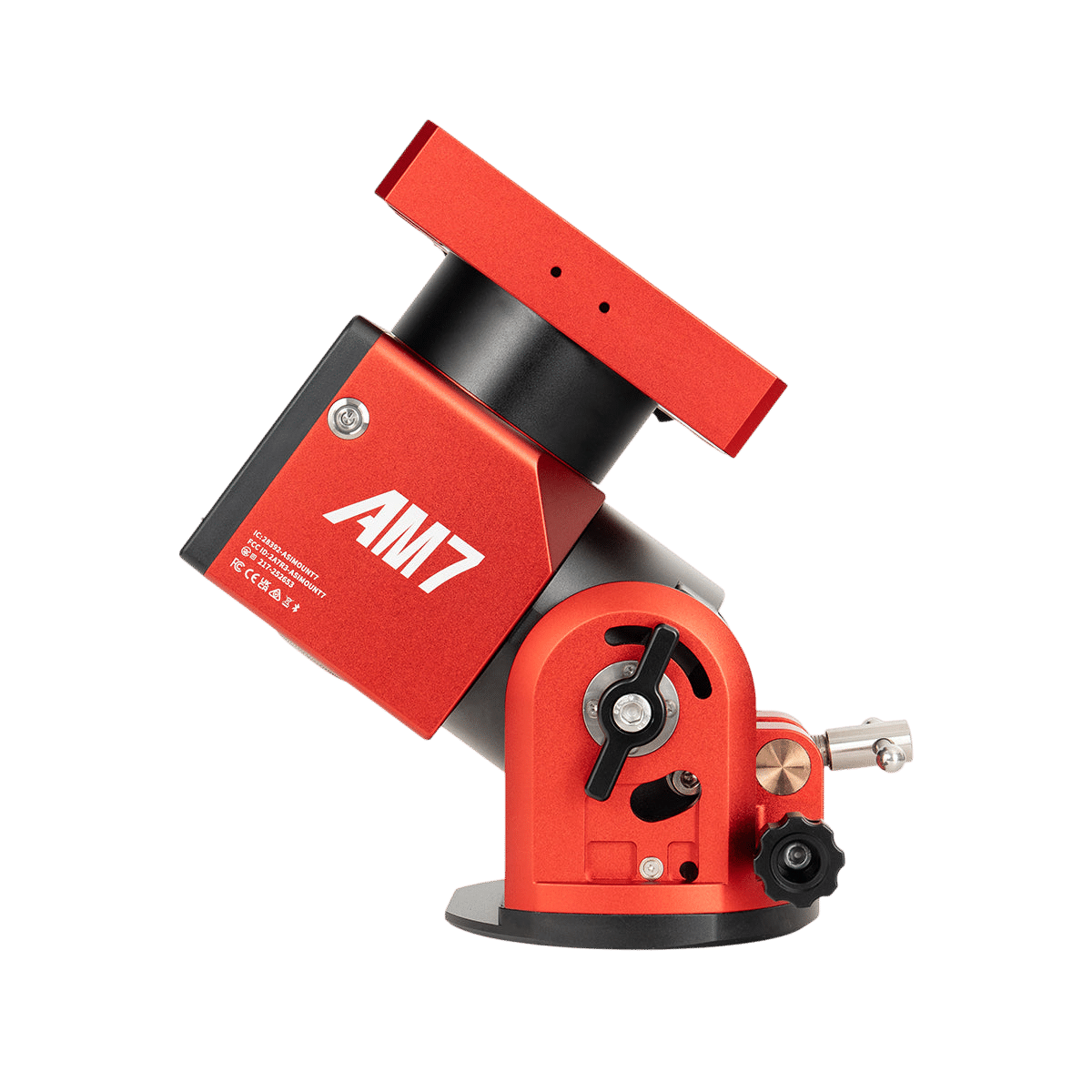
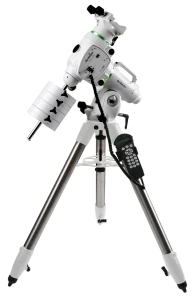
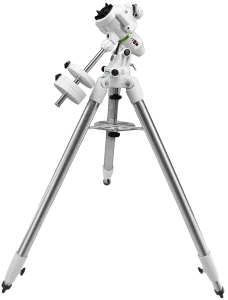
ZWO AM7: A Powerful and Versatile Harmonic Drive Mount
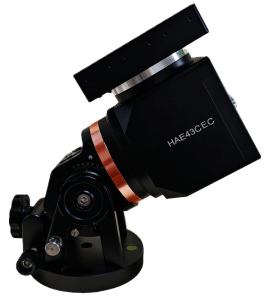
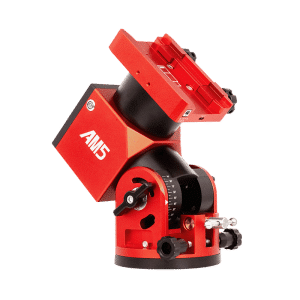
Visit ZWO AM7 is a Harmonic Drive equatorial mount designed for discerning astrophotographers looking for an excellent balance between load capacity, precision, and mobility. Thanks to its modern Strain Wave gear technology, it allows users to employ relatively heavy astrophotography equipment and setups while maintaining a compact design.
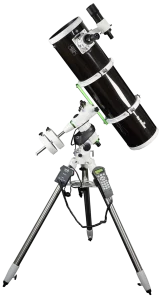
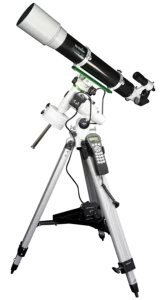
With a capacity of up to 20 kg without a counterweight and up to 30 kg with counterweight, the AM7 is ideal for setups equipped with a large refractor, a Newtonian telescope, or a complete imaging system that includes, among other things, a cooled camera, a filter wheel, and an autoguiding system.
High-Load-Capacity Strain Wave Technology
The ZWO AM7's drive system is based on the Strain Wave technology. This design provides high load capacity while keeping weight and size within manageable limits.
With up to 20 kg load without a counterweight, the AM7 can be used in a configuration that is particularly simple and quick to set up. For heavier equipment, adding a counterweight allows it to achieve an impressive capacity of 30 kg.
This high load capacity allows for the use of large instruments and complete imaging setups, while retaining the advantages of a Harmonic Drive mount.
Precision tailored for astrophotography
The ZWO AM7 has a typical periodic error of only ±10 arcseconds. Each frame is individually tested and comes with its custom test report, which allows users to view the tracking performance of their own unit.
Combined with a system of’self-steering, this level of precision allows for exceptionally accurate tracking, particularly during Long exposures in deep-sky astrophotography. The AM7 is therefore ideally suited for applications requiring stable and consistent tracking during long imaging sessions.
Two operating modes
The AM7 can operate just as well in both equatorial and alt-azimuth modes. This versatility makes it easy to adapt the frame to the intended use.
The equatorial mode is particularly well-suited for astrophotography, while the Alt-Azimuth mode is better suited for visual observation. A single telescope can thus meet a variety of astronomical needs.
Flexible, Connected Monitoring
The ZWO AM7 offers a wide range of control options. It can be controlled via Wi-Fi or Bluetooth, but also thanks to a ASIAIR: a traditional manual control or a web interface accessible via a browser.
This variety of solutions makes it possible to adapt the mount's operation to different types of installations. The use of a ASIAIR is particularly useful for astrophotography, since it allows you to centralize control of the mount and other equipment in the setup.
Optimized Cable Management
ZWO has also integrated the power and data connections directly at the mount's clamp. This design reduces the number of cables that need to run around the frame and helps create a cleaner installation.
This system is particularly convenient for mobile installations and automated or remote observatories, where proper cable management is essential to ensure reliable operation and minimize the risk of snagging.
Designed for fixed and mobile installations
Thanks to its rugged design and good resistance to cold conditions, the ZWO AM7 can be used in both permanent monitoring center ...only during mobile astrophotography sessions.
It is designed to operate at temperatures up to −20 °C, which allows it to remain operational in harsh winter conditions. Its combination of durability, load capacity, and mobility makes it an ideal mount for astrophotographers looking for versatile, high-performance equipment.
Technical specifications
| Features |
ZWO AM7 |
| Type |
Harmonic Drive Equatorial Mount |
| Technology |
Strain Wave |
| Load without counterweight |
20 kg |
| Load with counterweight |
Up to 30 kg |
| Typical periodic error |
±10 arcseconds |
| Operating modes |
Equatorial and Alt-Azimuth |
| Control |
Wi-Fi, Bluetooth, ASIAIR, manual control, and web interface |
| Self-steering |
Compatible |
| Connections |
Power and data integrated at the clamp |
| Operating temperature |
Up to −20 °C |
Visit ZWO AM7 This makes it a particularly attractive Harmonic Drive mount for demanding astrophotography setups. Its load capacity of up to 20 kg without a counterweight and 30 kg with a counterweight, its typical periodic error of ±10 arcseconds and its compatibility with autoguiding make it possible to consider high-end, high-performance imaging setups. With its Equatorial and Alt-Azimuth modes, with its wide range of control options and built-in connections, it is a versatile solution for both observatories and mobile astrophotographers.
Documentation and Compatibility: ZWO official data sheet.